
Natural rock armour has gradually been replaced by double-layer concrete armour units.
Artificial concrete blocks have formed the basis of coastal protection structures for more than seventy years.
From the 1950s onwards, the first double-layer blocks appeared, in particular the Tetrapod and the BCR, relying on two superimposed layers to ensure breakwater stability. These new technologies provided greater stability than natural rock armouring and made it possible to limit the opening of quarries required for the production of very large rock units. The technical standards defining the quality of rock armouring required to ensure the durability of these highly stressed structures have continued to become more stringent, making technologies based on artificial concrete blocks increasingly attractive.
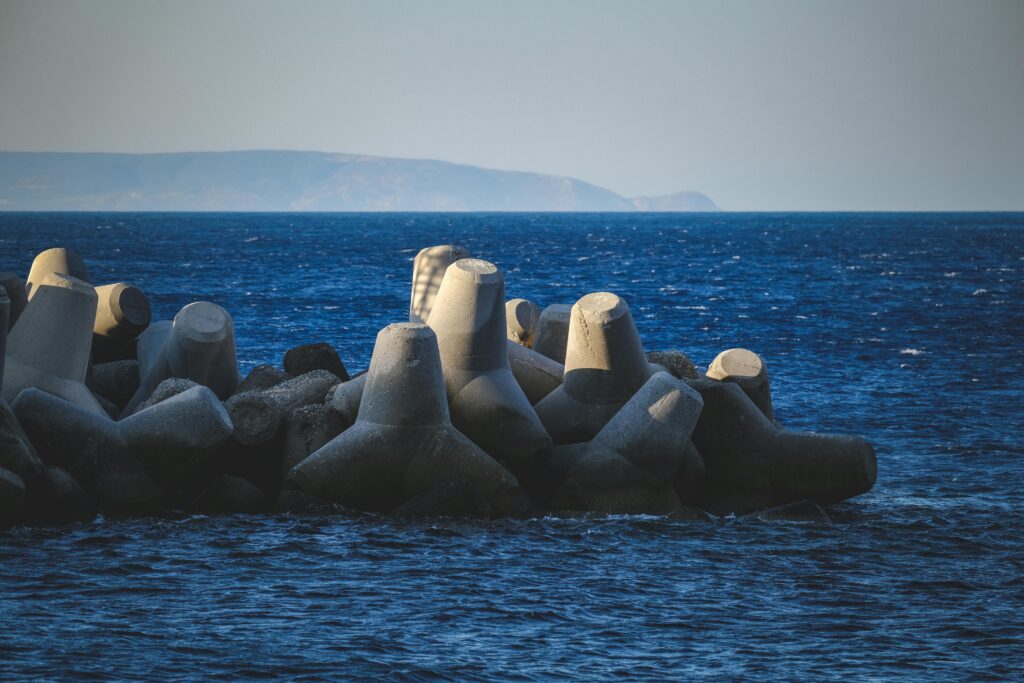
1979: The Revolution of Highly Interlocking Single-Layer Armour
A major turning point came in 1979 with the invention of the first single-layer concrete armour unit, the ACCROPODE™. This technology marked the beginning of our inspectors’ experience with judicial expert assessments of breakwaters, notably at Argelès-sur-Mer in 2000 and ZIFMAR in Sète in 2003. This block reduced the volume of concrete and significantly improved the interlocking between units.
This breakthrough paved the way for several other single-layer geometries: Xbloc®, CORELOC, and various optimized variants designed to improve hydraulic stability.
ACCROPODE™: registered trademark owned by the ARTELIA group, which is in no way affiliated with CLAS.
Xbloc®: registered trademark owned by Van Oord.
CLAS is a company independent of licence vendors, specialising in the placement of highly interlocking artificial armour units, regardless of brand.
From 2000 onwards, the company IDMer specialized in the implementation of these artificial concrete blocks. In 2015, IDMer became CLAS, which has continued this specialization. CLAS is now a global reference in technical assistance for the installation of artificial concrete armour units and quality certification. The strength of CLAS lies in its unique and exclusive field experience and its independence with respect to historical license vendors.
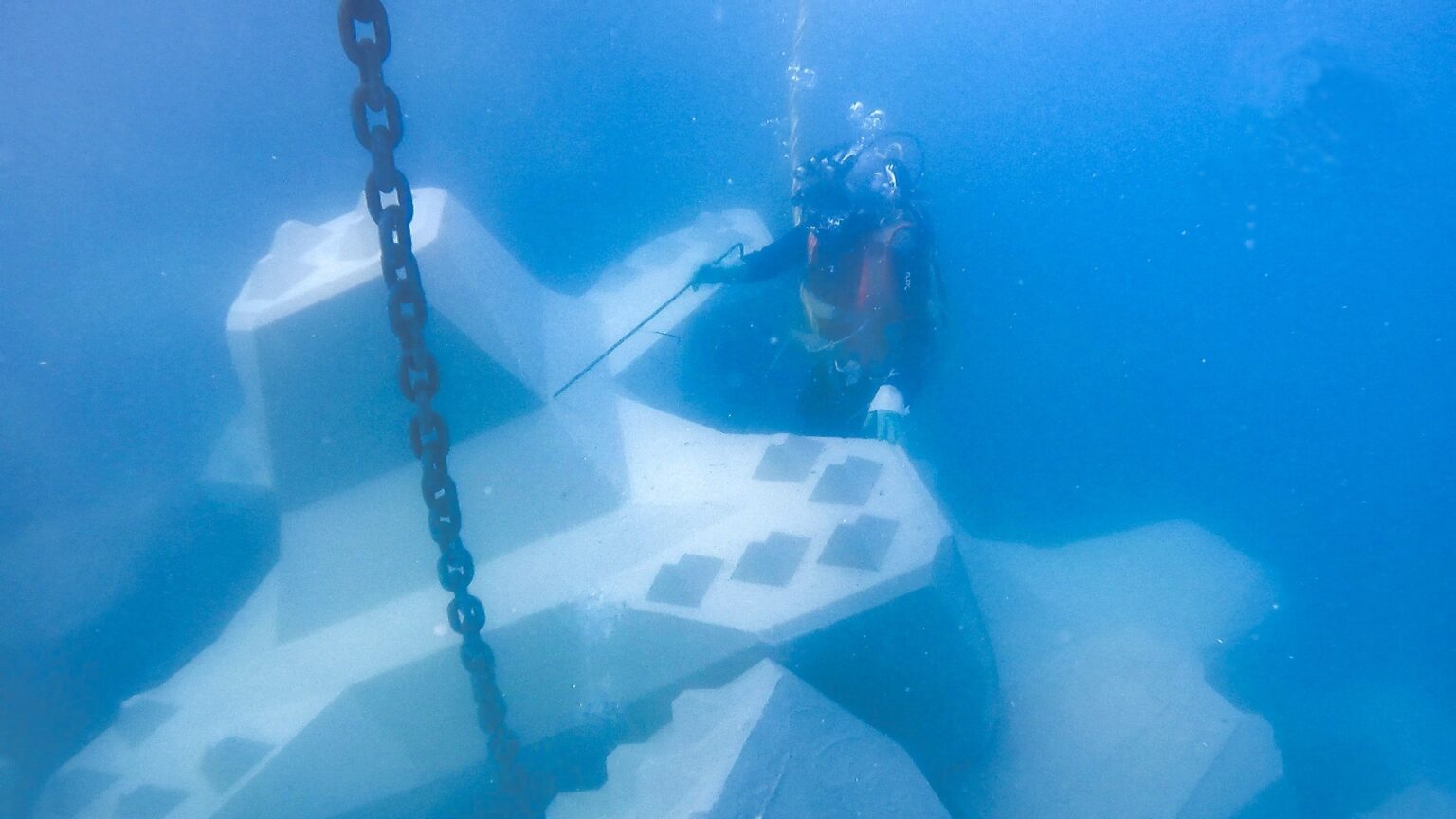
The following photo shows a CLAS expert diver placing armour units for the company Bouygues on the Port-La-Nouvelle construction site.
Why CLAS has become an essential partner for breakwater armour layer projects
CLAS has established itself as a leading specialist in breakwater construction projects using artificial concrete armour units, providing added value that licence holders do not offer.
Unlike suppliers of armour units or licences, CLAS operates with complete independence, focusing exclusively on installation quality, operational safety and the long-term performance of maritime structures.
CLAS provides a comprehensive range of services, including:
- Continuous on-site technical assistance throughout the construction project.
- Specialised installation teams, consisting of professional divers specifically trained in the installation of artificial concrete armour units.
- Safety training programmes tailored to each project and local site conditions.
- Detailed risk assessments, taking into account the hydraulic, geotechnical and operational characteristics of each project.
- Comprehensive certification of breakwater structures, covering all structural components: underlayer, scour protection apron, armour layer, toe berm and crest structure.
Furthermore, CLAS is able to respond directly to tenders requiring specialised underwater installation services performed by qualified professional divers, capabilities that licence suppliers generally do not possess.
This comprehensive, independent and field-oriented approach positions CLAS as a trusted technical partner for project owners and marine construction contractors, ensuring compliance with industry best practices while contributing to the long-term durability and safety of breakwater structures.
CLAS project references and client testimonials confirm its position as a specialist in the installation of artificial concrete armour units of all types and brands, including CORELOC, Xbloc® and other technologies.
Through the involvement of specially trained professional divers, CLAS ensures high safety standards, rigorous installation quality and the long-term performance of maritime structures on every project.
We invite you to explore our completed projects, organised by armour unit type, as well as feedback from our clients, demonstrating the effectiveness and professionalism of our field operations.
CLAS operates in complete independence, whatever the armour unit technology selected, at the service of contractors and project owners, providing the services that meet their needs.
The Entry of Single-Layer Armour Units into the Public Domain
The historical patents relating to the majority of single-layer armour units are now expired.
They fall within the industrial public domain, allowing companies to offer:
- equivalent armour units,
- without paid licensing,
- fully compliant with public procurement requirements.
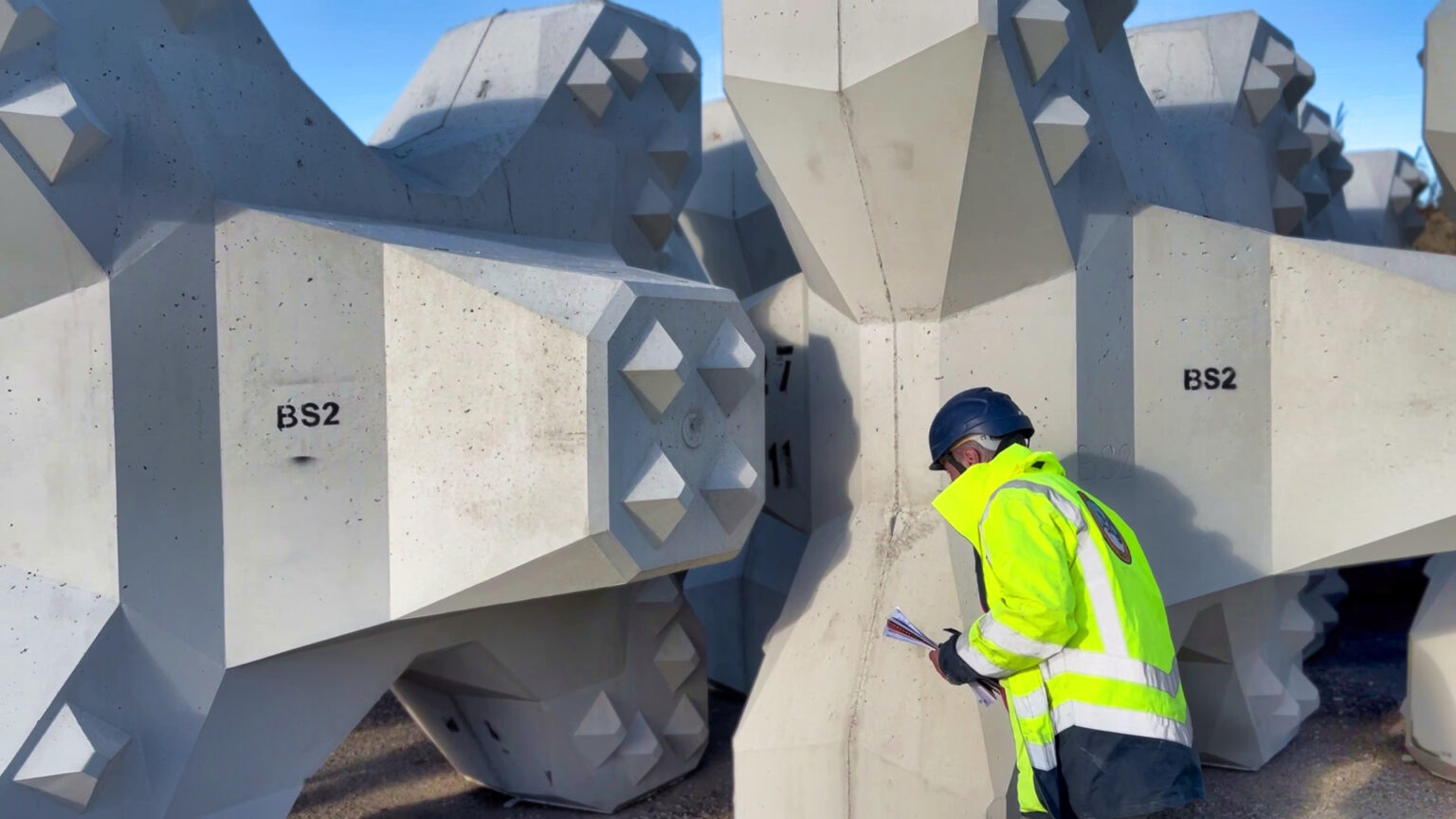
This development puts an end to situations of quasi-technical monopoly and restores broader and more cost-effective choices for contractors. The following photograph illustrates this principle.
The contractor consortium responsible for the construction of the Argelès-sur-Mer breakwater, RAZELBEC–BUESA–TDA, entrusted CLAS with full technical assistance for this project, from the preparation of placement drawings through to final certification for a Class A structure. The consortium incurred no license fees for this armour unit.
A European Framework Requiring Open Competition
Directive 2014/24/EU – Article 42 §4
Directive 2014/24/EU – Article 42(4) requires that any reference to a trademark, patent or model be systematically accompanied by the wording “or equivalent”.
This rule is intended to ensure:
free competition,
equal access to public procurement,
and the absence of dependency on a registered trademark.
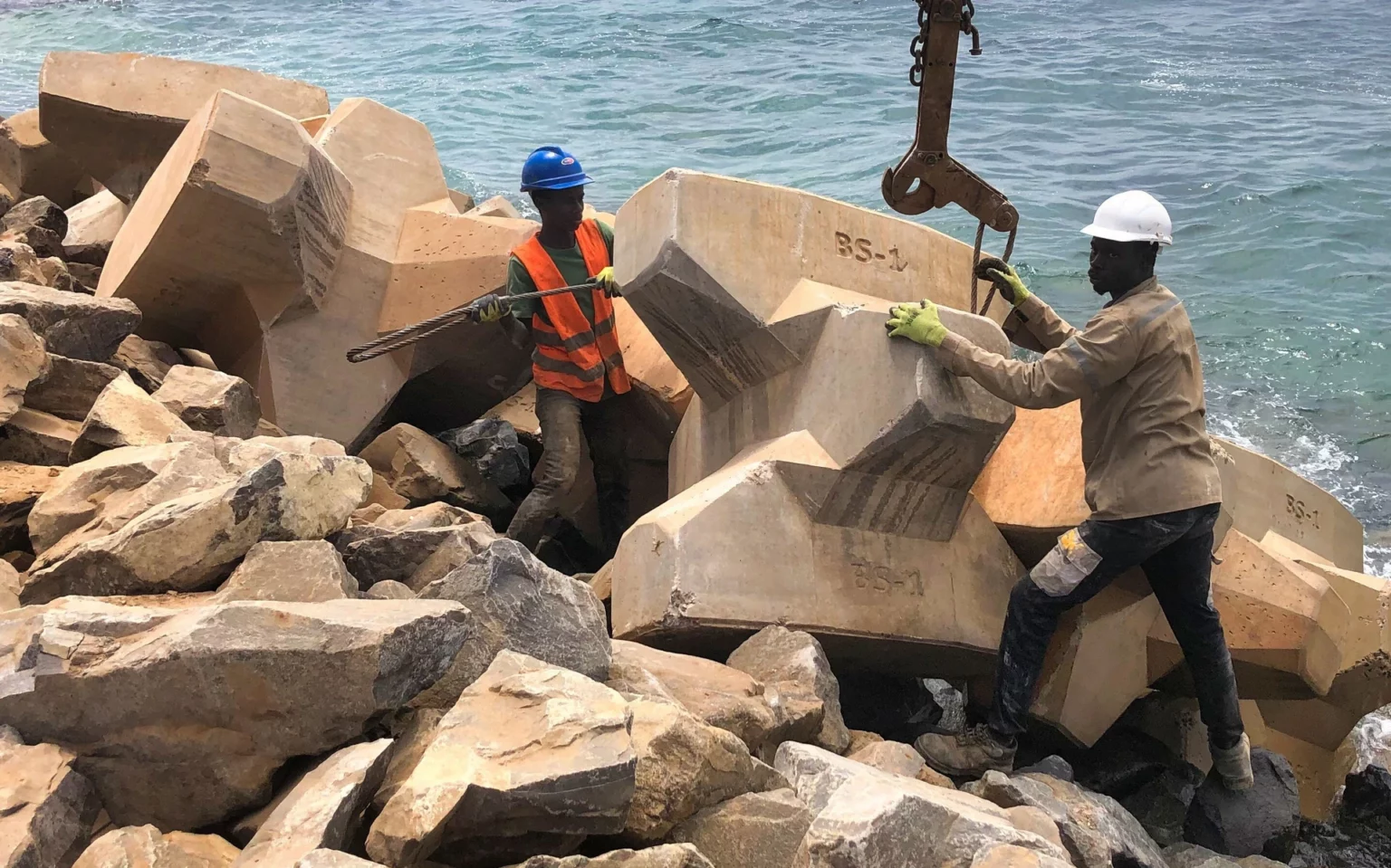
The following image shows the installation of BS1 units on the protective breakwater of the AZALAI Hotel in Dakar. No license fees were paid for this armour unit.
Transposition into French Law
In France, this obligation is reflected in:
Article R2111-7 of the French Public Procurement Code,
the guidelines issued by the Directorate of Legal Affairs (DAJ).
Public contracting authorities may therefore never impose the exclusive use of a registered armour unit without allowing the proposal of an equivalent unit. Extracts from recent CCTP documents for Port Gardian and La Chatière illustrate this legal obligation.
Based on its full independence, CLAS has made available to companies wishing to use these technologies that have entered the public domain the BREAKWATER SOLUTION™ trademark, in order to avoid any risk of trademark infringement.
BREAKWATER SOLUTION™: The Modern and Independent Solution
To address this new context, CLAS created BREAKWATER SOLUTION™, a brand dedicated to equivalent artificial blocks that fall within the public domain.
BREAKWATER SOLUTION™ allows companies to:
offer royalty-free blocks,
guarantee performance equivalent to registered brands,
benefit from comprehensive CLAS support: block placement drawings, installation assistance, real-time inspection, external quality control and final certification.