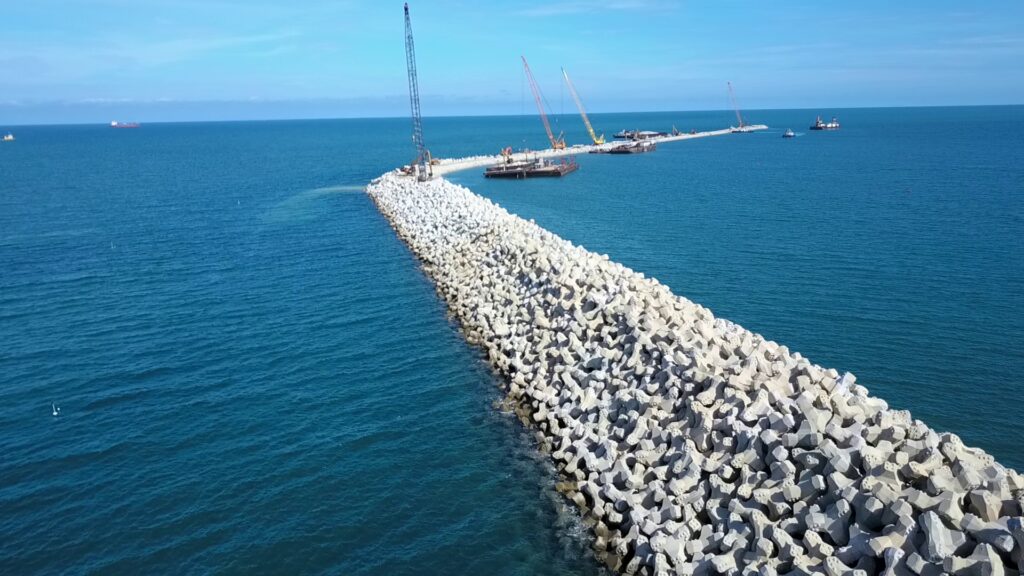
Certifying the execution quality of a breakwater built with artificial concrete armour units, from the underlayer to the crest
From the Underlayer to the Crest: Independent Certification Based on Inspection, Risk Assessment and Engineering Best Practice.
Why Certify a Maritime Breakwater?
The certification of a maritime protection structure cannot be reduced to a partial or purely visual inspection of the armour layer.
Experience shows that the stability of a breakwater protected by artificial armour units depends on the integrity of the entire structure, including:
- the underlayer (thickness, grading, surface profile and roughness);
- the armour layer and the effective interlocking of the units;
- the toe berm, which provides support and restraint for the first row of armour units;
- the crest zone and its upper restraint.
A non-conformity affecting any one of these components may compromise the overall stability of the structure, even when the armour layer appears, at first sight, to have been correctly placed.
A certificate of conformity based on only a limited number of isolated criteria cannot be regarded as a certification of the overall quality of the completed works.
The Origins of CLAS Certification
Since 2009, CLAS has developed and applied an independent certification of the quality of maritime breakwaters built with artificial concrete armour units, based on direct observation of the structures, underwater inspection, and strict compliance with the rules of good practice.
This procedure, initially developed by IDMer and subsequently structured by CLAS, has been applied to numerous port and coastal projects, in France and internationally, on breakwaters exposed to severe wave conditions.
The objective of CLAS certification is clear: to guarantee the stability, durability and execution compliance of the structures, regardless of the type of artificial concrete armour units used and their method of deployment.
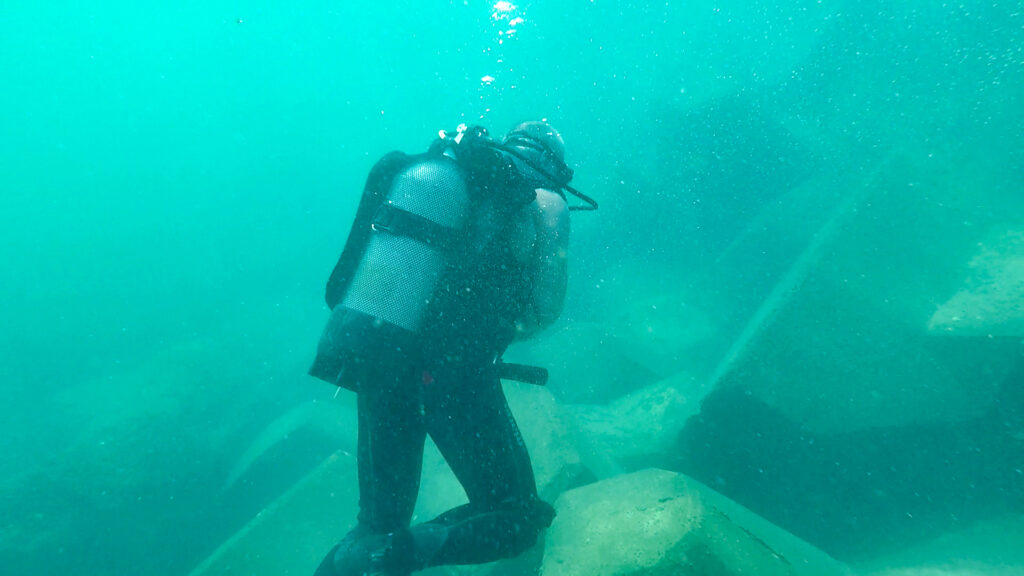
The first assignments that led to the CLAS certification originated from technical and judicial expert assessments addressing disorders observed on armour layers made of artificial concrete blocks.
These expert assessments aimed to determine the origin of the damage, analyze the underlying mechanisms, and confirm whether the remedial works complied — or did not comply — with the rules of good practice.
Progressively, the need to objectively assess the actual quality of breakwater construction execution also emerged in the industrial and port sectors. The objective was no longer limited to diagnosing disorders, but to prevent their occurrence through a structured approach to inspection and certification.
It was in this context that the CLAS certification of maritime breakwaters with artificial concrete armour layers was established.

Engineering Best Practice Requirements for Single-Layer Armour Systems
International references for breakwater construction, including the Rock Manual and the CEREMA Rock Manual, emphasize a fundamental principle:
Single-layer interlocking armour systems are designed to operate with zero damage.
Even minor levels of damage are considered unacceptable, as they may lead to the rapid progression of failures and the loss of armour layer stability.
In this context, the quality of placement, compliance with geometric tolerances, effective interlocking of the armour units and the prompt correction of non-conformities are essential to ensure the long-term durability of the structure.
Assessing Non-Conformities: A Risk-Based Approach
A non-conformity identified on a breakwater does not automatically require systematic reconstruction. The actual risk that it poses to the structure must first be assessed.
Since 2009, CLAS has applied a four-level risk classification developed from extensive field experience and engineering expertise:
🟢 Risk Level 0: isolated defect with no potential impact on structural stability – no action required.
🟢 Risk Level 1: isolated defect that may evolve over time without immediate serious consequences – correction or monitoring.
🟠 Risk Level 2: defect likely to develop rapidly with potentially serious consequences – immediate correction required.
🔴 Risk Level 3: multiple or interconnected defects resulting in significant structural distress – reconstruction of the affected area required.
This risk-based approach helps avoid both unnecessary reconstruction and the underestimation of critical defects.
Standards and References used for CLAS Certification
The certification of a maritime structure consists of assessing its compliance with a set of technical requirements established before the start of the inspection process.
For each project, CLAS develops a project-specific certification scheme. This scheme is prepared at CLAS headquarters in Andorra on the basis of the project’s contractual documents, engineering best practice and internationally recognised technical references in the field of maritime structures.
The certification scheme serves as the reference document throughout the construction project. It defines the technical requirements applicable to the structure, the inspection methods, the acceptance criteria, the inspection procedures, the required objective evidence and the conditions governing the issuance of the certification.
Normative References
The CLAS certification process is organised in accordance with internationally recognised principles governing inspection and certification activities.
In particular, it takes into account:
- the principles defined in ISO/IEC 17020 relating to the organisation of inspection activities;
- the principles defined in ISO/IEC 17065 relating to the organisation of certification activities, in particular the separation between evaluation activities, technical review and certification decision-making.
These standards provide the methodological framework on which the CLAS certification process is based. They do not constitute a claim that CLAS is accredited or certified under these standards.
Voluntary Certification in a Highly Specialized Field
The Limitations of Formal Accreditation
To date, no official accreditation scheme exists specifically for the certification of breakwaters protected by single-layer artificial armour units. Consequently, the services provided by CLAS constitute a voluntary certification process, requested by marine contractors or required contractually by certain project owners.
The certification schemes developed by CLAS are based on recognised engineering best practice in the field of maritime structures, the project’s contractual documentation, the technical references applicable to the armour unit technology employed, and the organisational principles defined in ISO/IEC 17020 and ISO/IEC 17065.
In the absence of an official accreditation scheme applicable to this field, no certification activity may be described as official in the sense of being carried out under an officially accredited scheme.
The principles of ISO/IEC 17065 were developed for sectors in which inspection, technical review and certification decision-making can be assigned to clearly separate individuals or organisational entities.
The certification of breakwaters protected by single-layer artificial armour units, however, is a highly specialised activity. It requires expertise in maritime structures, coastal protection technologies, underwater inspection techniques and the mechanisms governing the stability of single-layer armour systems.
In practice, these competencies are currently held by only a very limited number of specialists. The inspectors deployed on construction sites are specifically trained by CLAS and belong to the same organisation as the personnel responsible for the technical review and approval of certification files.
This organisational structure does not allow full compliance with the organisational requirements of ISO/IEC 17065, which presuppose a greater separation between the various certification functions.
For this reason, CLAS does not claim ISO/IEC 17065 accreditation. Instead, its certification process applies, to the fullest extent compatible with the practical realities of this highly specialised field, the principles of impartiality, traceability, independent technical review and certification decisions based exclusively on the technical evidence collected during the assignment.
General Technical References
The certification scheme is established with due consideration to the principal technical references applicable to the project, including:
- The Rock Manual – The Use of Rock in Hydraulic Engineering, the international reference for the design, construction, inspection and maintenance of rock hydraulic structures;
- CEREMA Rock Engineering Guide (Guide Enrochement), the French reference for the design, construction, inspection, monitoring and maintenance of maritime and river structures, including breakwaters protected by artificial armour units.
Project Technical Documentation
The certification scheme also takes into account all project-specific documentation, including:
- construction drawings;
- the Technical Specifications (CCTP) and the contractual documents;
- design calculations;
- geotechnical, hydraulic and oceanographic studies;
- the specific requirements of the Project Owner and the Engineer;
- the quality procedures applicable to the construction works.
Technical Installation Standards
For breakwaters protected by artificial armour units, the certification scheme takes into account the technical installation reference applicable to the project.
This reference is established by the organisation or technology owner responsible for the technical assistance, installation control or certification of the armour unit placement. It defines, in particular, the installation methods, acceptance criteria, inspection procedures, traceability requirements and quality control procedures applicable to the project.
The technologies concerned may include:
- ACCROPODE™ or BS1;
- ACCROPODE™ II or BS2;
- CORE-LOC™;
- Xbloc® or BS3;
- Cubipod®;
- Tetrapod;
- STARBLOCK™;
- or any other protection system used on the project.
The CLAS certification scheme is then developed on the basis of this technical installation reference, supplemented by the project’s contractual documentation, the applicable technical references and the specific requirements of the Project Owner.
Trademark Notice
ACCROPODE™ and ACCROPODE™ II are trademarks of the ARTELIA Group. Xbloc® is a registered trademark of Van Oord. Cubipod® is a registered trademark of SATO (OHLA Group). BREAKWATER SOLUTION™ and STARBLOCK™ are trademarks of CLAS.
The trademarks referred to on this website are mentioned solely for the purpose of identifying the technologies or technical references applicable to the projects concerned. Except for BREAKWATER SOLUTION™ and STARBLOCK™, CLAS is independent of the owners of these trademarks. Their mention does not imply any affiliation, representation, endorsement, partnership or commercial relationship between their owners and CLAS.
All inspection, quality control and certification activities are carried out by CLAS with complete technical and decision-making independence, without any relationship with the owners of third-party trademarks that could influence the inspection findings, technical conclusions or certification decisions.
The CLAS Certification Process
The CLAS certification process is designed to ensure the independence of technical findings, the traceability of the information collected and the impartiality of certification decisions.
Each certification assignment is tailored to the nature of the structure, the Project Owner’s requirements, the stage of construction and the scope of services entrusted to CLAS. Depending on the project, certification may begin before construction starts, during the construction phase or at the completion of the works. Inspections may be carried out on either a continuous or a periodic basis, depending on the level of surveillance required.
The process distinguishes between certification planning and management activities, performed at the CLAS headquarters, and the inspections and quality control activities carried out on the construction site.
1. Preparation of the Certification File at the CLAS Headquarters in Andorra
Before inspections begin, CLAS establishes the project’s certification file. This preparation phase includes, in particular:
- reviewing the project’s technical and contractual documentation;
- defining the scope of the certification assignment;
- identifying the applicable standards and technical references;
- developing the project-specific certification scheme;
- establishing the inspection and quality control procedures;
- preparing the monitoring and traceability documentation;
- planning the inspection activities.
2. Inspections and Quality Control of the Breakwater
Inspections are carried out in accordance with the certification scheme established for the project. Depending on the scope of the assignment, they may include:
- visual inspections;
- dimensional and geometrical measurements;
- observation of installation methods;
- armour unit placement density checks;
- underwater inspections;
- photographic and video surveys;
- preparation of inspection reports.
The certification process may cover the entire construction process of the breakwater, including:
Design
Review of the design profiles, construction materials, layer thicknesses and water depths specified by the designer.
Armour Unit Placement Plans
Verification that the placement plans are consistent with the actual site conditions, the specified tolerances and the transitions between the different areas of the structure.
Construction Phase Inspections
- inspection of the underlayer and toe berm;
- regular underwater inspections;
- inspection of artificial armour unit installation;
- above-water inspections and drone surveys.
Each construction stage is subject to validation before the subsequent phase of the works is authorised to proceed.
All observations, inspection findings and supporting evidence are incorporated into the certification file.
3. Independent Technical Review at the CLAS Headquarters in Andorra
Upon completion of the inspections, the certification file undergoes an independent technical review to verify:
- the completeness of the certification file;
- the consistency of the information collected;
- the conformity of the inspections performed;
- the correct application of the certification scheme.
This review may result in requests for additional information, supplementary inspections or corrective actions before any certification approval decision is made.
4. Certification Approval Decision at the CLAS Headquarters in Andorra
Following the independent technical review, CLAS determines whether the structure complies with the applicable certification scheme.
Depending on the outcome of the certification process, the structure may be:
- approved;
- approved subject to reservations or limitations;
- not approved, where the identified non-conformities prevent a conclusion that the structure complies with the applicable certification scheme.
This decision is based exclusively on the technical evidence collected during the certification process and on the certification scheme applicable to the project.
5. Issue of the Certification File at the CLAS Headquarters in Andorra
When the certification requirements have been satisfied, CLAS issues the documents specified within the scope of the certification assignment, which may include:
- certification reports;
- technical recommendations, where applicable;
- the certification or conformity certificate.
All documents produced during the certification process are archived to ensure the traceability of the certification assignment and, where necessary, to allow the certification file to be reviewed at a later date.
Outcome: A CLAS Class A Certified Breakwater
A CLAS Class A Certified Breakwater is a structure that:
- complies with its approved design and the installation technology applied;
- has been constructed in accordance with the specified tolerances and acceptance criteria;
- demonstrates verified structural stability and long-term durability.
CLAS certification provides Project Owners and Contractors with objective technical assurance based on factual observations, documented technical evidence and independent engineering expertise.
Where the certification requirements are satisfied, CLAS issues a Class A Certificate of Conformity, confirming that the structure complies with the certification scheme applicable to the project.
The meaning of the different certification classes (Class A, Class B and Class C) is explained in the CLAS Breakwater Classification Scheme.
➡️ Discover the CLAS Classification of Certified Breakwaters
Certification deliverables
The documents provided to the client depend on the scope of the certification assignment and the services actually performed during the project.
Depending on the project requirements, the deliverables may include:
- the project-specific certification scheme;
- the inspection and quality control programme;
- inspection reports;
- technical quality control reports;
- measurement and inspection records;
- annotated inspection drawings;
- photographic records;
- inspection videos, including underwater inspection videos where applicable;
- records of non-conformities and their follow-up;
- technical recommendations;
- the certification report;
- the CLAS Class A Certificate of Conformity, where the certification requirements have been satisfied.
Together, these documents constitute the Certification File for the structure. They provide full traceability of the inspections performed, the observations recorded, the technical assessments carried out and the certification decision.
In accordance with its internal procedures, CLAS retains the Certification File for the period specified in its document retention policy.
A certification recognized on major international projects
For more than fifteen years, CLAS certification has been built on a simple reality: a maritime breakwater built with artificial concrete armour units can only be considered compliant and durable if its design, installation and control strictly comply with the rules of good practice applicable to highly interlocking single-layer systems.
By relying on direct inspection of the structures, underwater presence, rigorous analysis of non-conformities and an objective risk classification, CLAS provides an independent technical guarantee, based on real on-site experience rather than theoretical or partial validations.
This global approach, from the underlayer up to the crest, enables project owners and maritime contractors to secure their projects, reduce technical and contractual risks, and guarantee the stability and durability of maritime breakwaters, regardless of the technology or type of artificial concrete armour units implemented.
Choosing CLAS certification means choosing independent, pragmatic and recognized expertise, serving execution quality and the long-term durability of coastal protection structures.
CLAS Certification of the Constanța Breakwater, Romania, Protected with ACCROPODE™ II Armour Units.
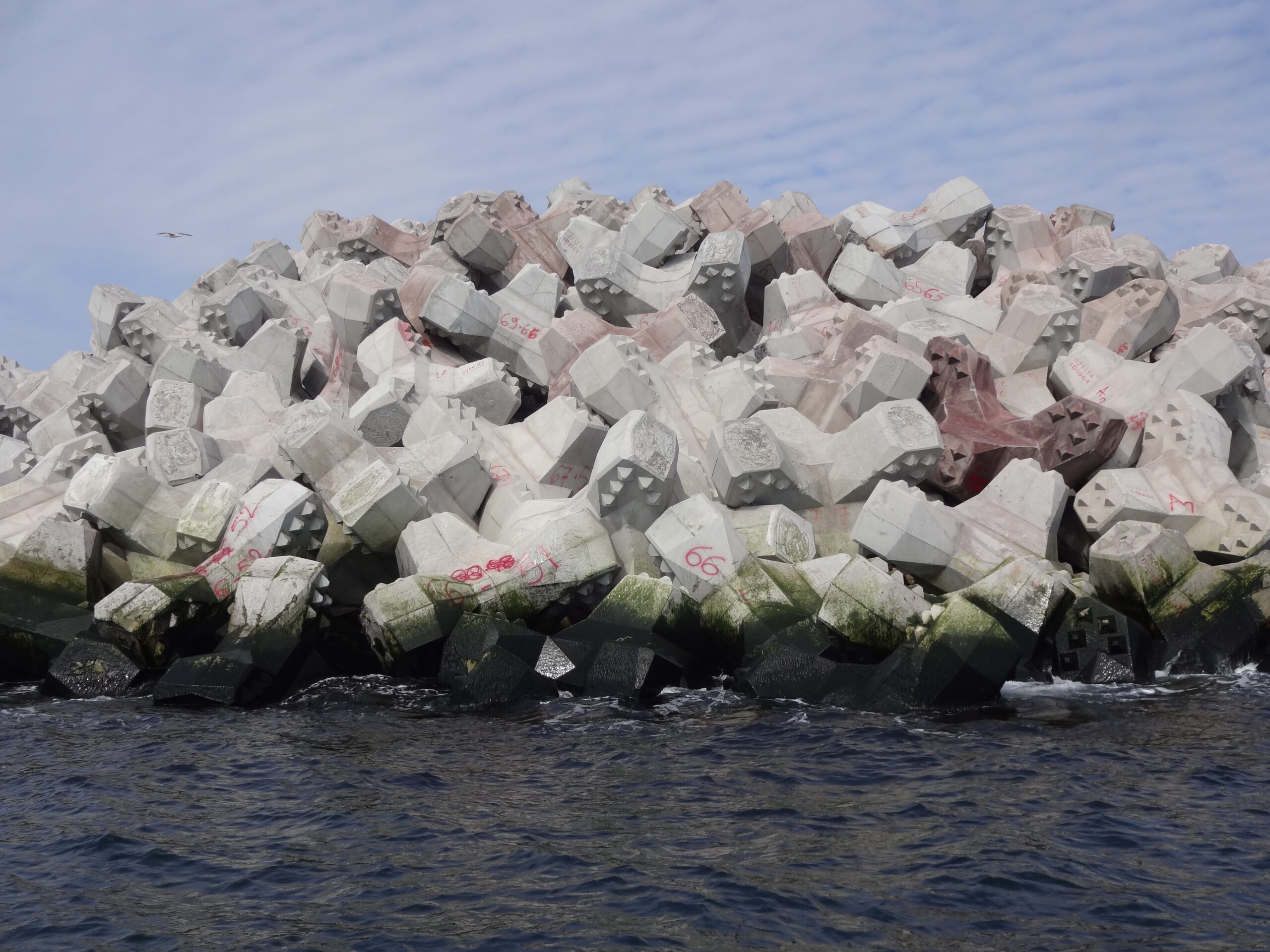
Certification de la digue en CORELOC de la raffinerie de Al Zour au Koweit.
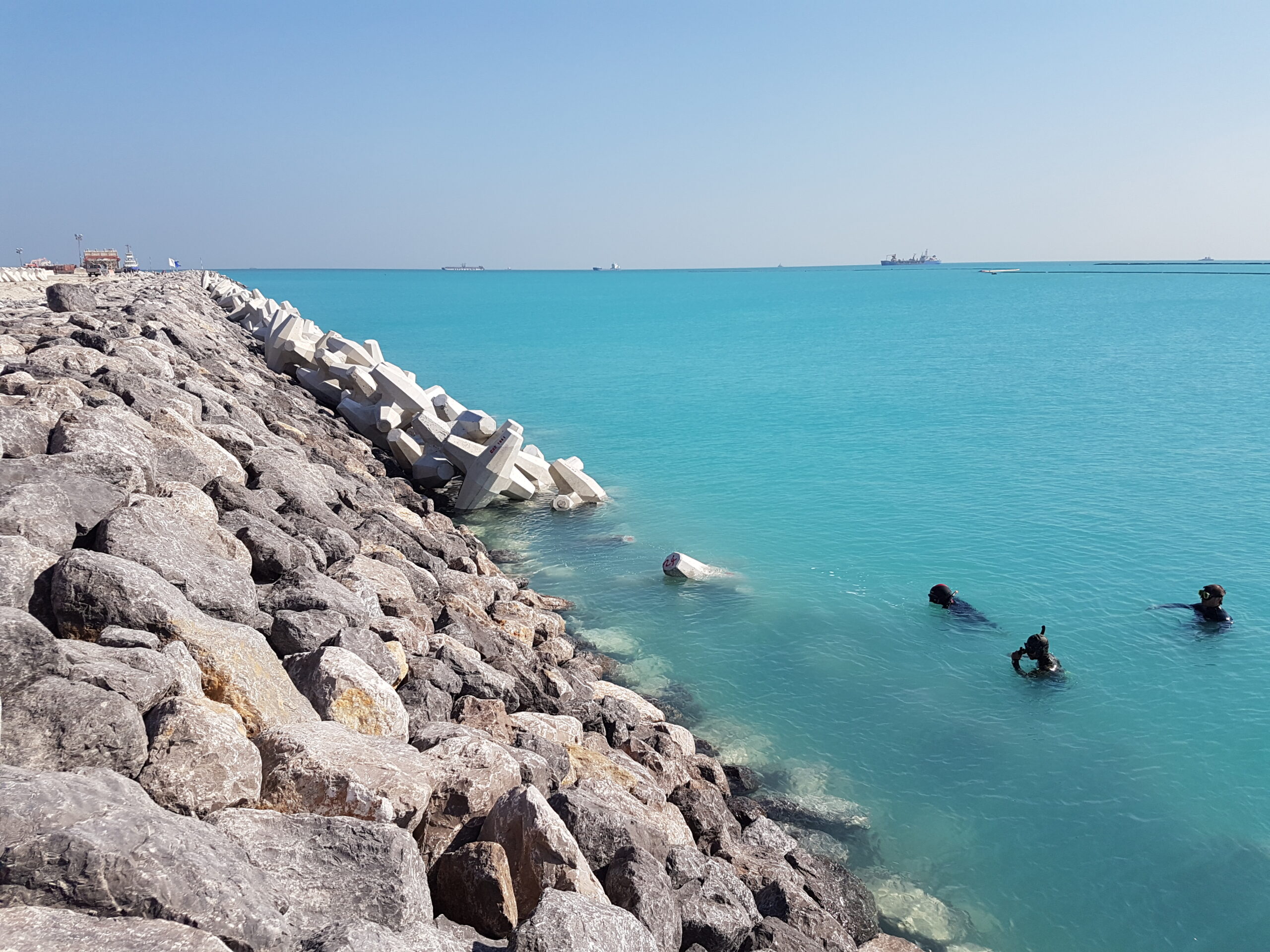
CLAS Certification of the ACCROPODE™ Breakwaters Protecting the New Beirut Marina, Lebanon.
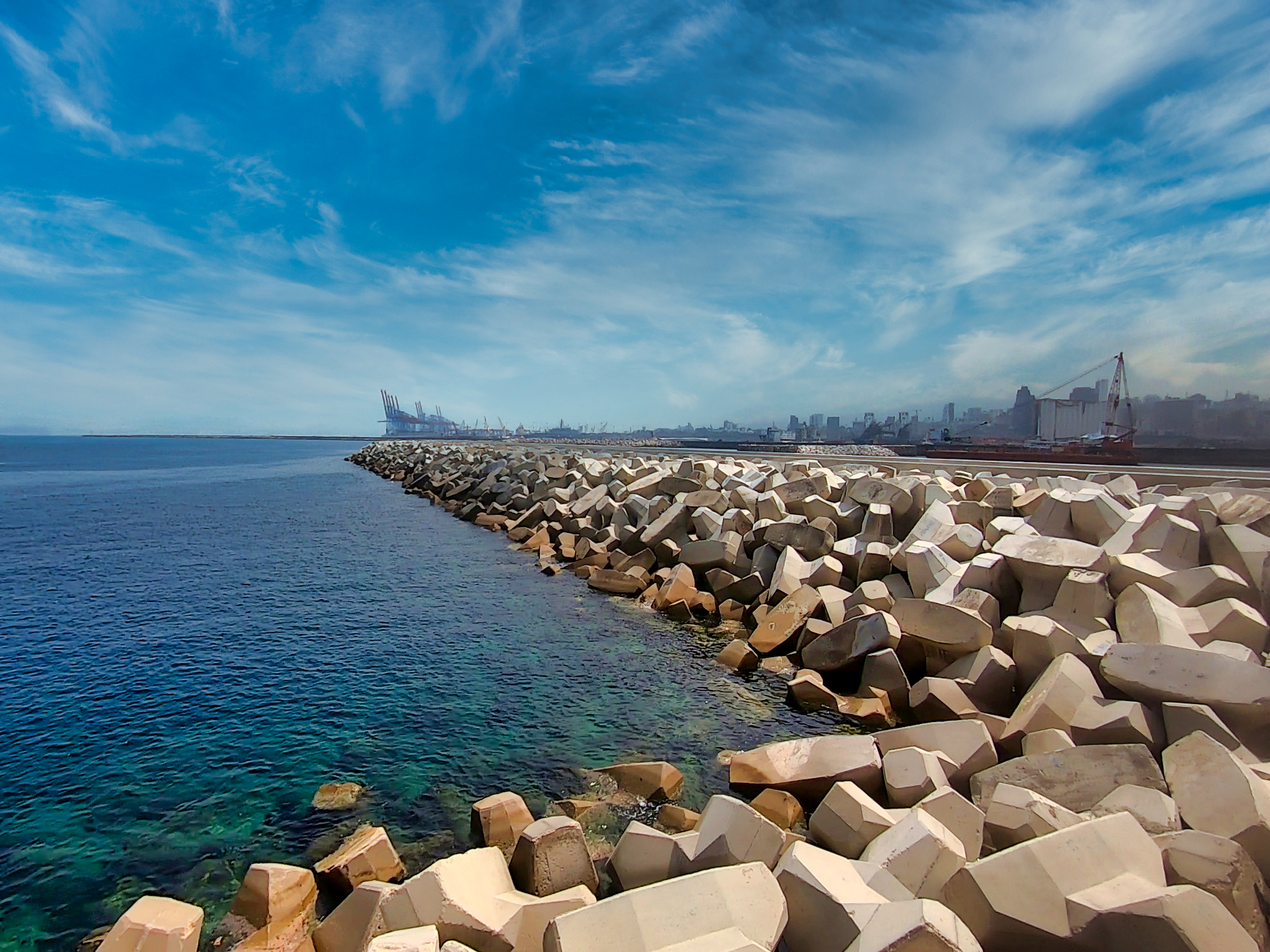
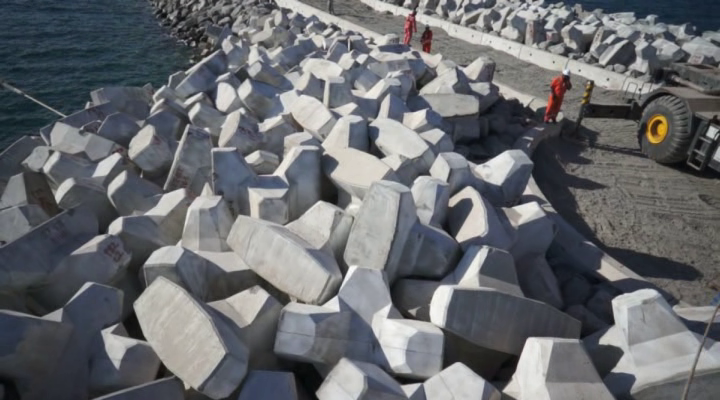
Certification of the ACCROPODE™ armour layer of Zirku Island in Abu Dhabi
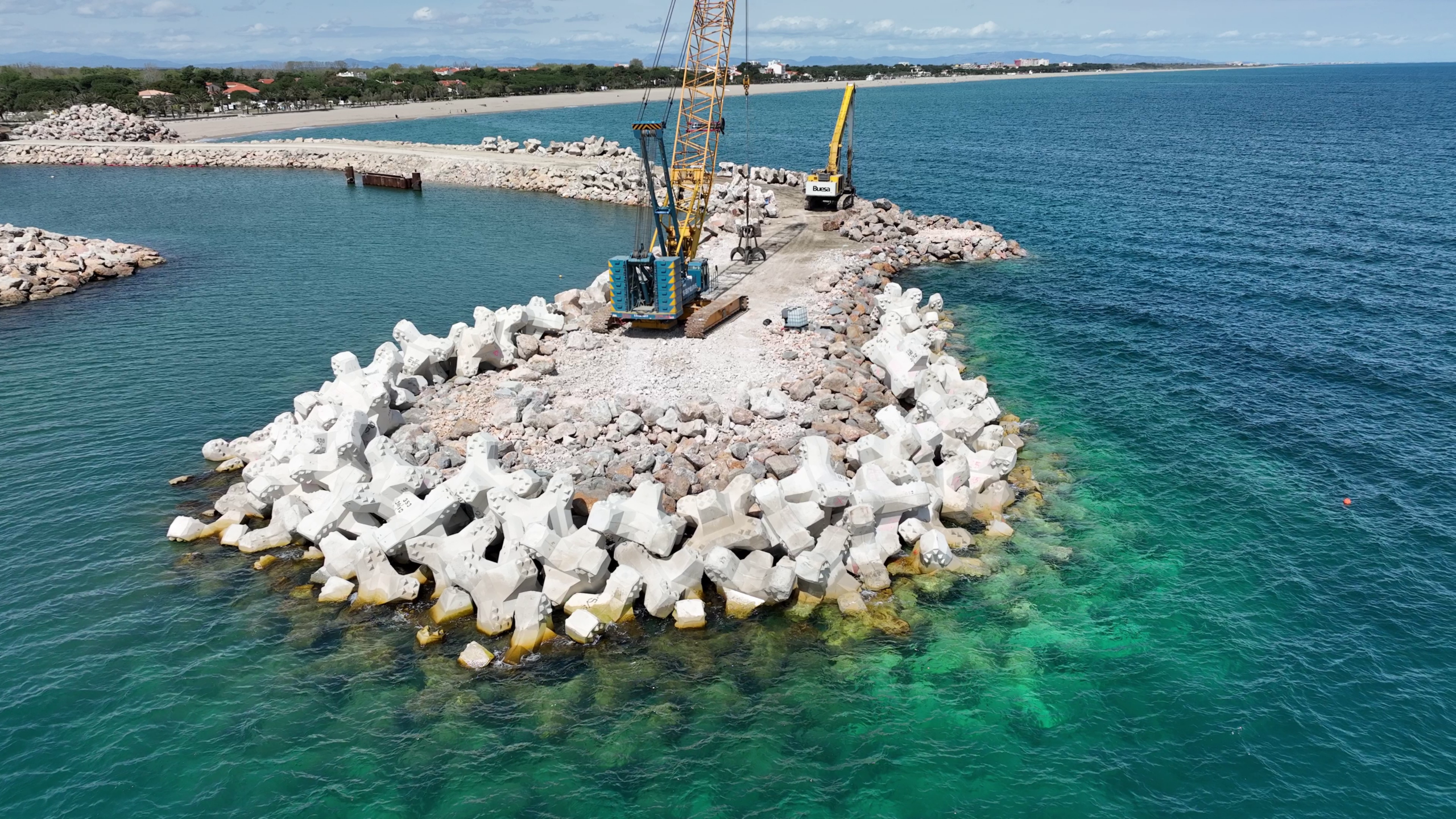
CLAS Certification of the ACCROPODE™ II Armour Layer at Kuantan Port, Malaysia.
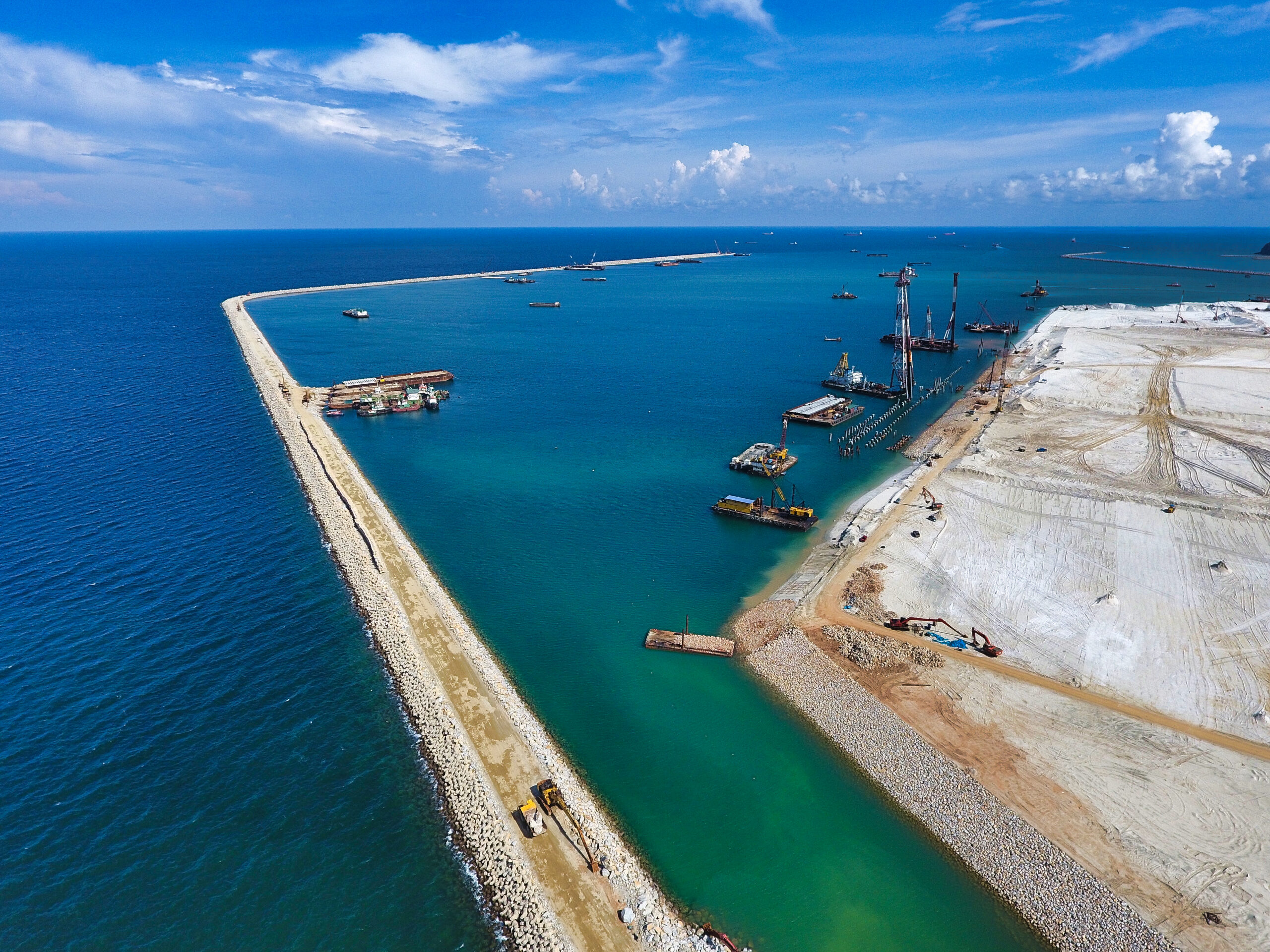
CLAS Certification of the ACCROPODE™ II Armour Layer at Kuantan Port, Malaysia.
Conclusion
Since its establishment, CLAS has supported Project Owners and Marine Contractors in the certification of breakwaters protected by artificial armour units. Built on extensive field experience, technical independence and strict compliance with engineering best practices, the CLAS certification methodology helps ensure construction quality, structural stability and the long-term durability of coastal protection structures.