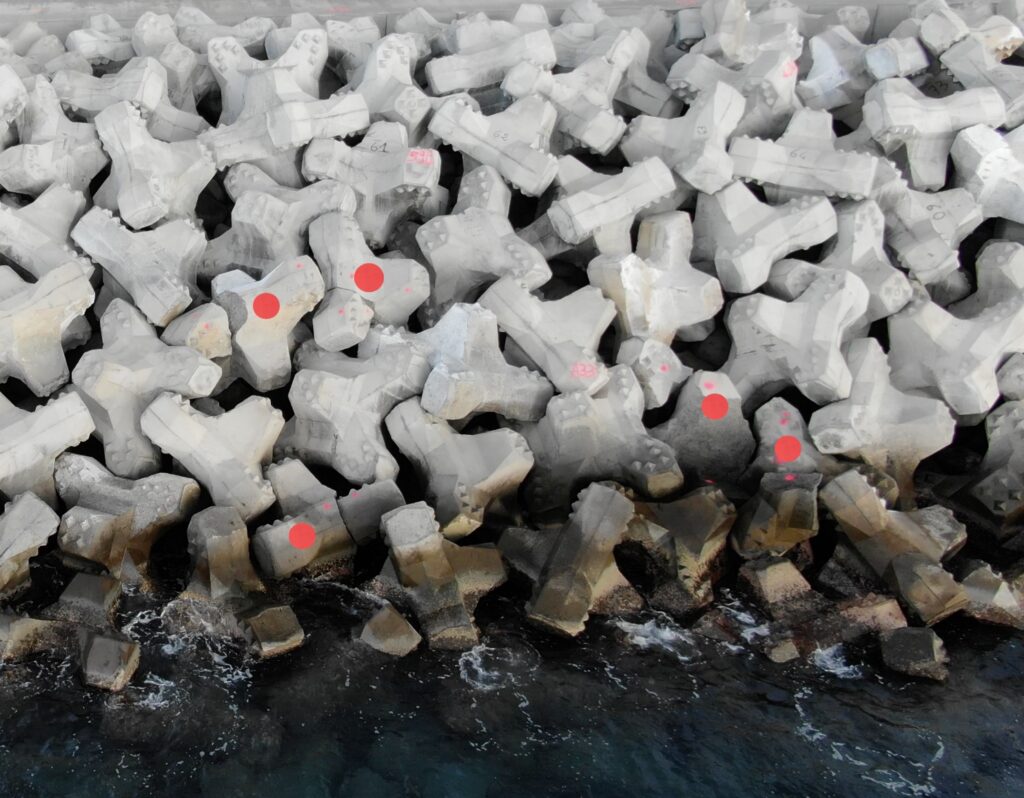
CLAS specializes in the independent technical expertise of breakwaters protected by concrete armour units. We intervene on port and coastal structures in service, under construction or affected by damage, in order to identify technical causes, assess risks to the stability and durability of the structures, and propose appropriate solutions, based on on-site inspections, underwater inspections and in-depth technical analyses.
A rare specialty, built on cross-disciplinary expertise and absolute independence
Independent technical expertise, grounded in real field experience
For more than thirty years, CLAS has been carrying out independent technical expertise on maritime structures, and more specifically on breakwaters with highly interlocking artificial concrete block armour layers.
These expert assessments cover structures in service, under construction, or affected by damage, and aim to establish an objective diagnosis based on direct observation, underwater inspection, and analysis of the actual stability mechanisms of the armour layers.
CLAS operates at the request of owners, Engineers in charge of design, construction supervision and works acceptance, contractors, insurers, or courts, in contexts where technical, financial, and contractual stakes are high.
Ethics of the court-appointed expert serving the industry
CLAS conducts its breakwater expertise missions within a strict ethical framework, based on independence and impartiality. In this context, its founder has acted on two occasions as a court-appointed expert in proceedings before the Administrative Court of Montpellier, concerning port and coastal protection structures, with assignments including independent technical analysis of construction practices, identification of defects and assessment of the associated liabilities.
By way of example, the Argelès-sur-Mer breakwater exhibited abnormal degradation of its armour layer made of ACCROPODE™ units shortly after completion. The court-appointed expert mission entrusted to Mr. Skierniewski made it possible to identify the causes of the defects and the corresponding liabilities.
The ZIFMAR breakwater in Sète experienced a similar situation and was subject to the same level of technical and ethical rigor. It was during these two judicial expert assignments on breakwaters protected by concrete armour units that the classification of risks associated with construction non-conformities was developed.
At the time of these events, the ACCROPODE™ trademark was owned by SOGREAH, which marketed the related license contract and was therefore a party to the proceedings. Mr. Skierniewski, acting as a court-appointed expert, as well as his successive companies IDMer and then CLAS, were not and have never been affiliated in any way with SOGREAH, nor with ARTELIA and CLI, respectively owner of the ACCROPODE™ II trademark and holder of the related license distribution rights.
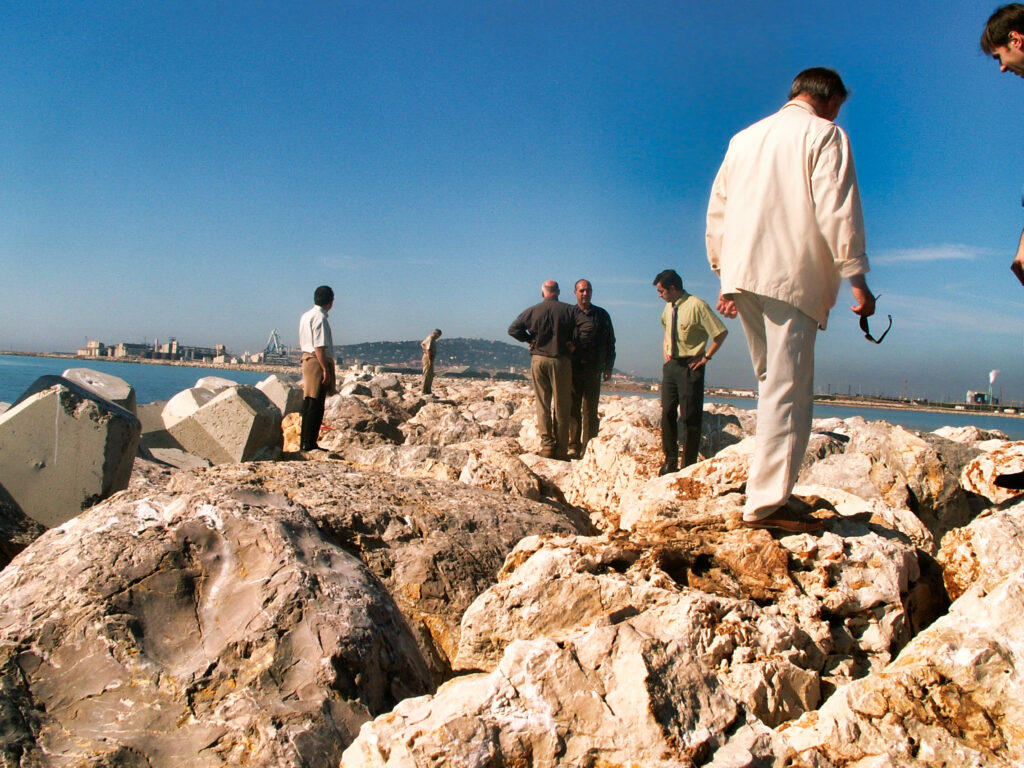
Contradictory expert operations on the ZIFMAR breakwater
The judicial expert mission on the Argelès-sur-Mer breakwater entrusted to us in 2000 by the Administrative Court of Montpellier
The technical scope of this mission is fully representative of the assignments for which we have all the required competencies and the necessary technical resources:
– to obtain all documents deemed useful for the accomplishment of the mission;
– to carry out inspections on the northern breakwater of the Port of Argelès-sur-Mer and describe the defects affecting the structure, specifying the date of their occurrence;
– to investigate the origin and causes of these defects, indicating in particular whether they relate to design, site management, construction supervision or execution;
– to specify the respective share of responsibility in the event of multiple contributing causes;
– to define the nature and cost of the works required to remedy the observed defects;
– more generally, to provide any technical elements likely to assist the Court should the case be examined on the merits.
In 2012, CLAS (then IDMer) was commissioned by FINIM to carry out a technical expertise of the armour layer of the Ospedaletti breakwater (Italy), protected by ACCROPODE™ II and ECOPODE™ concrete armour units.
In the same year, CLAS (then IDMer) also intervened to assess the armour layer protected with Xbloc® units on the Das Island breakwater. This structure, initially built and controlled without diver inspections, experienced significant damage under relatively moderate wave conditions. In total, approximately 4,500 metres of Xbloc® armour had to be repositioned.
The expertise led to an agreement between the parties on the causes of the defects, and all remedial works were subsequently carried out by divers under the supervision of IDMer, now CLAS.
ACCROPODE™ II and ECOPODE™ are trademarks of the ARTELIA Group. Xbloc® is a trademark of Delta Marine Consultants (DMC).
These companies are in no way affiliated with CLAS, whose total independence in the field of expertise is a fundamental requirement.
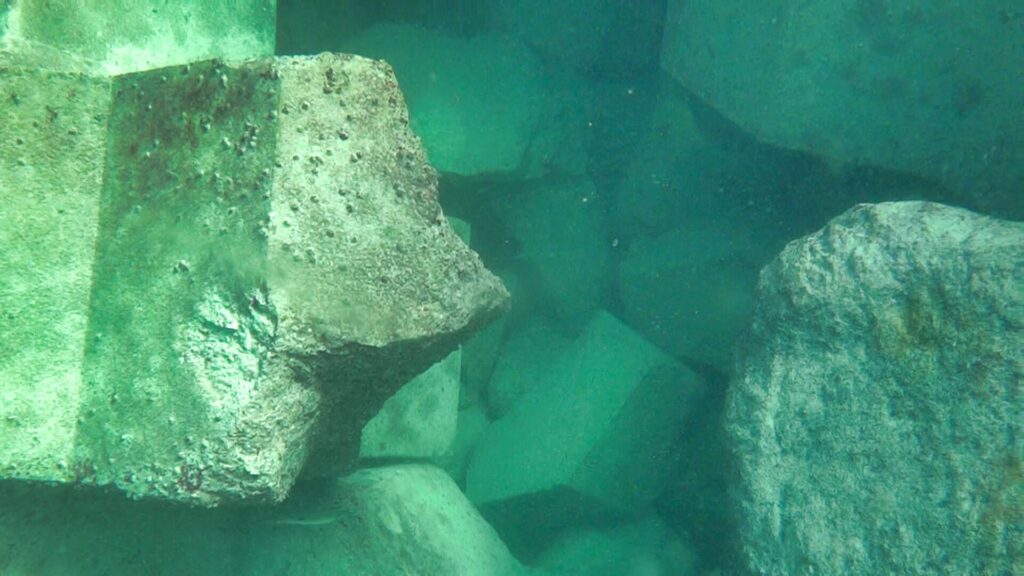
Broken Xbloc® units within the armour layer of the Das Island breakwater
https://clascertification.com/en/project/barakah-nuclear-power-plant-expertise-assistance-construction/In 2013, the construction site of the breakwater protecting the water intake structures of the Barakah nuclear power plant in Abu Dhabi was at a standstill. Approximately 110,000 CORELOC™ units were to be installed using POSIBLOC™-type systems, under a license agreement entered into by NMDC with CLI.
IDMer, now CLAS, was then requested to carry out an independent technical audit of the site.
As the acceptance criteria of the armour layer were not met, the installation of the CORELOC™ units could not be accepted as built. The expertise carried out made it possible to align the parties on this technical assessment.
CLAS was subsequently commissioned to provide training for diver teams, to control the remedial works related to non-conformities and to supervise the completion of the construction works. The testimonial from NMDC attests to the methodological rigor and the quality of the interventions carried out.
At the time of these events, the CORELOC™ trademark was owned by the U.S. Navy Corps of Engineers, and CLI was its authorized distributor in the United Arab Emirates. None of these entities is affiliated with IDMer or CLAS, which enabled them to carry out these expert missions in full independence.
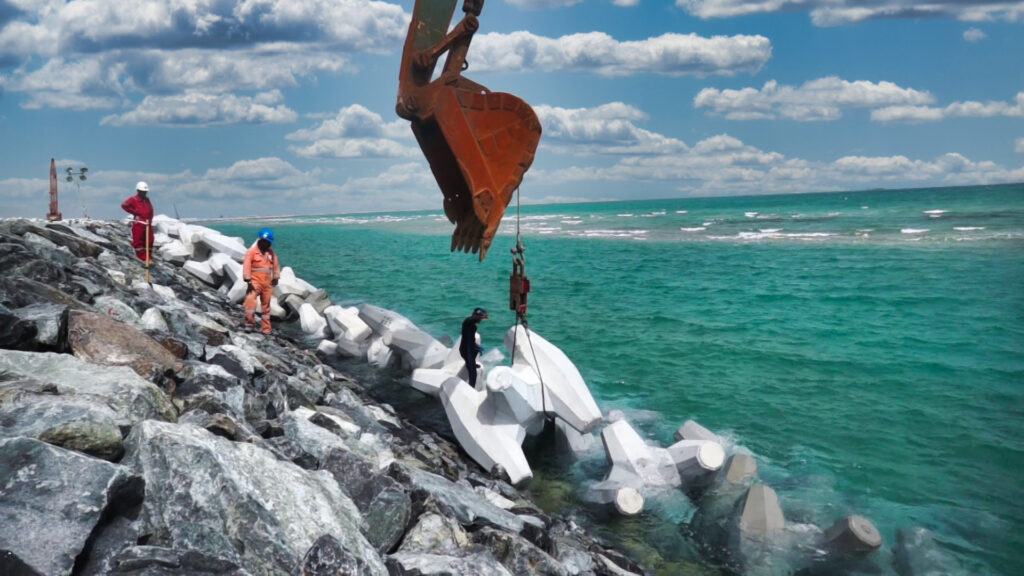
In 2015, the armour layer of the Kuantan breakwater in Malaysia exhibited significant defects, and the owner ECERDC requested the intervention of CLAS for technical expertise purposes. We identified the causes of the defects and were subsequently commissioned to supervise the remedial works and certify the quality of the works.
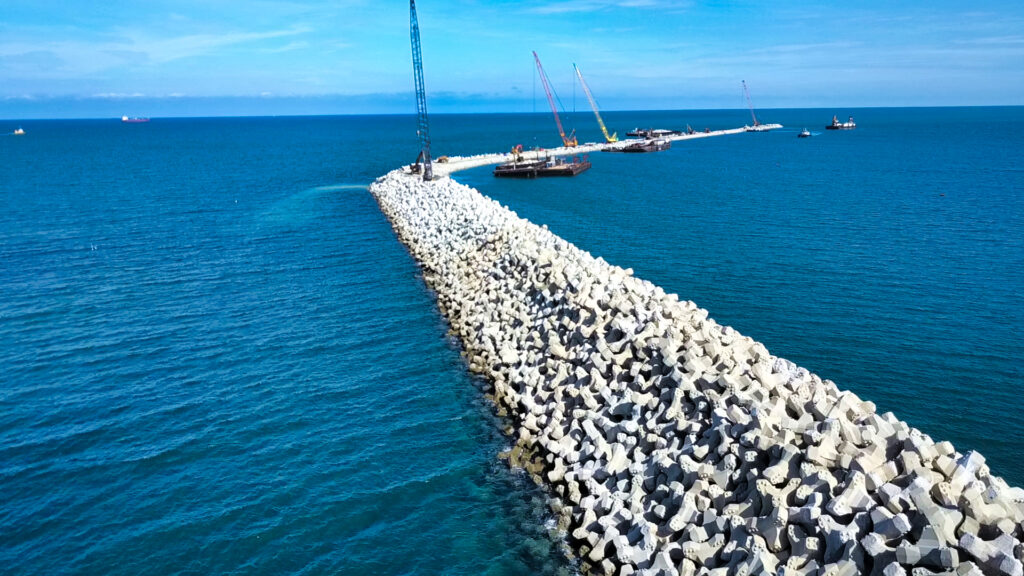
In 2018, the armour layers of the four breakwaters of the NRL (Nouvelle Route du Littoral) project on Réunion Island exhibited significant defects. The designer EGIS, followed by the Région Réunion, requested CLAS to determine the causes of the defects, analyze the associated risks and recommend the necessary remedial measures.
The expertise carried out made it possible to put an end to the judicial proceedings initiated following the defects observed on these breakwater armour layers, enabling the parties to agree on the repair solutions. CLAS was subsequently commissioned to provide an expert opinion on the conformity and quality of the remedial works carried out.
A significant part of the units had been installed using POSIBLOC™-type systems. POSIBLOC™ is a trademark of MESURIS, and ACCROPODE™ II is a trademark of the ARTELIA Group.
These entities are in no way affiliated with CLAS, which was therefore able to accept this expert assignment in full independence and in strict compliance with the applicable ethical rules.
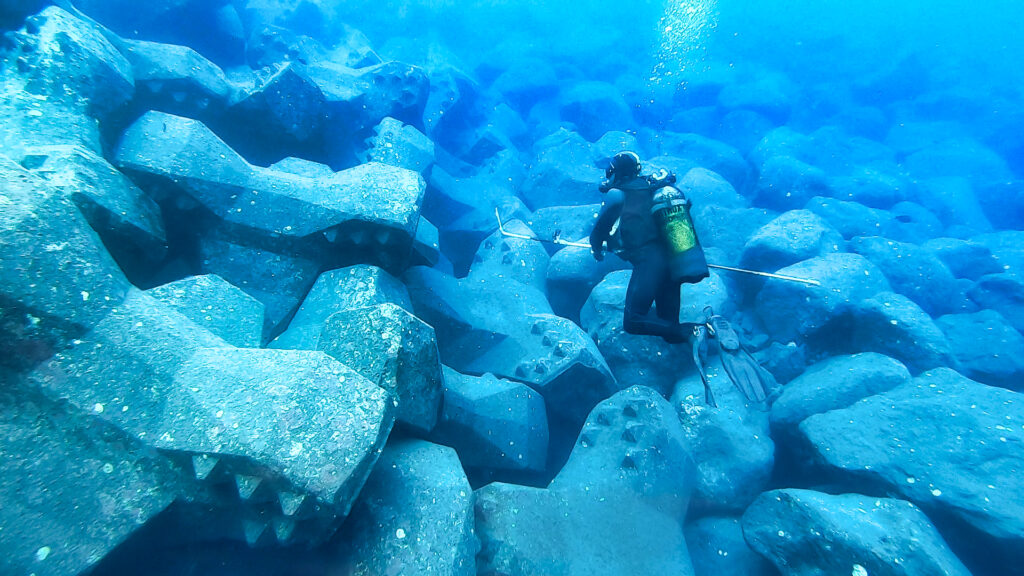
The difficult search for an expert for the armour layers of the NRL breakwaters on Réunion Island – extract from the contract between CLAS and the Région Réunion
Preamble
Following the 2017–2018 cyclonic season, the Engineer and the GTOL / SBTPC / VINCI Construction Terrassement consortium in charge of the works under contract MT 5.1 Breakwaters – Phase 1 observed the breakage of 105 ACCROPODE™ II and Xbloc® armour units on the completed but not yet accepted armour layers of breakwaters D1, D2, D3 and D4. These units were diffusely distributed over the four breakwaters, within the tidal zone.
It should be noted that CLI, holder of the ACCROPODE™ II patent, had been declared as a subcontractor to the consortium for services related to assistance with manufacturing and placement. The designer of the Xbloc units, Delta Marine Consultant, was also acting on behalf of the consortium.
CLAS, consulted on the recommendation of the Engineer, brings together experts and specialists in the construction of maritime structures who also act as judicial experts for the French courts since 1992. CLAS is in particular specialized in the supervision and certification of the placement of concrete armour units.
Considering:
① the lack of a justified explanation from the consortium regarding the origin of the observed defects, while it was in the process of demobilizing its armour placement equipment on contract MT 5.1,
② the diffuse distribution of the defects, which could indicate a common issue affecting the entire armour layer of the structures under contract MT 5.1, and possibly contract MT 2,
③ the potential consequences of exposure to cyclonic waves for a structure presenting defects and/or construction shortcomings,
④ the announcement by the consortium of its intention to shortly request partial acceptance of certain lower breakwaters under contract MT 5.1,
It appeared urgent for the Owner to launch an inspection and independent expertise of the consortium in charge of the works, in order to obtain:
① an inspection report, using all necessary means, of all armour layers of breakwaters already constructed, including a precise identification of the nature and location of each defect or disorder observed during the inspection on the armour layer or visible supporting and adjacent elements, accompanied by photographic or video evidence illustrating each defect,
② an expert opinion on compliance by the parties involved with manufacturing rules, placement procedures and acceptance criteria defined by the works contracts and/or by the patent holders,
③ an expert opinion on the possibility and likelihood of a causal link between the construction defects observed on the armour layers and the disorders observed on those same armour layers,
④ an expert opinion on the possible evolution, in the short or long term, of the defects or disorders observed on the armour layer,
⑤ in the event that the inspection highlights significant or repetitive manufacturing or placement defects by the main contractor, a targeted audit limited to a representative section of the structure, aimed at assessing the application and effectiveness of the corresponding Quality Assurance Procedures, in order to identify the probable causes of the malfunctions and to propose corrective actions for remedial works procedures or for the construction of future structures,
Accordingly, the Regional Council of Réunion needed to have at its disposal a high-level inspection and expertise capability, independent of the consortium in charge of the works, in order to manage this issue.
After sourcing, and on the recommendation of the Engineer, it appeared that CLAS, represented by Mr. Eric Skierniewski, was the only entity identified as being able to meet the above criteria while remaining independent from the companies concerned (CLI and Delta Marine Consultant in particular being unable to act as both judge and party).
Page 3 of 13
This extract from the contract between CLAS and the Région Réunion highlights the importance of CLAS’s independence with regard to the parties involved, and in particular the vendors ARTELIA, CLI and DMC, holders of the ACCROPODE™ II and Xbloc® trademarks, with whom CLAS maintains no affiliation.
Expert mission entrusted to CLAS by the Engineer EGIS on the NRL breakwater construction project
4.1 – Objective of the mission
The mission consists of providing technical assistance to Egis on the armour layers of the NRL breakwaters, following the observation of damage.
The purchase orders issued under this contract may cover:
• On the one hand, interventions on the construction sites and onshore and underwater inspections, including photo/video recording,
• On the other hand, the production of technical analyses and expert opinions on the following topics, it being understood that this list is not exhaustive:
○ Breakwater expertise;
○ Determination of the causes of breakage;
○ Actions to be taken on broken units;
○ Actions to be taken on the armour layer already constructed;
○ Recommendations for the installation of the armour layer of breakwaters not yet constructed.
○ And more generally, the provision of technical opinions on the entire production / installation chain of the armour layers and the associated controls.
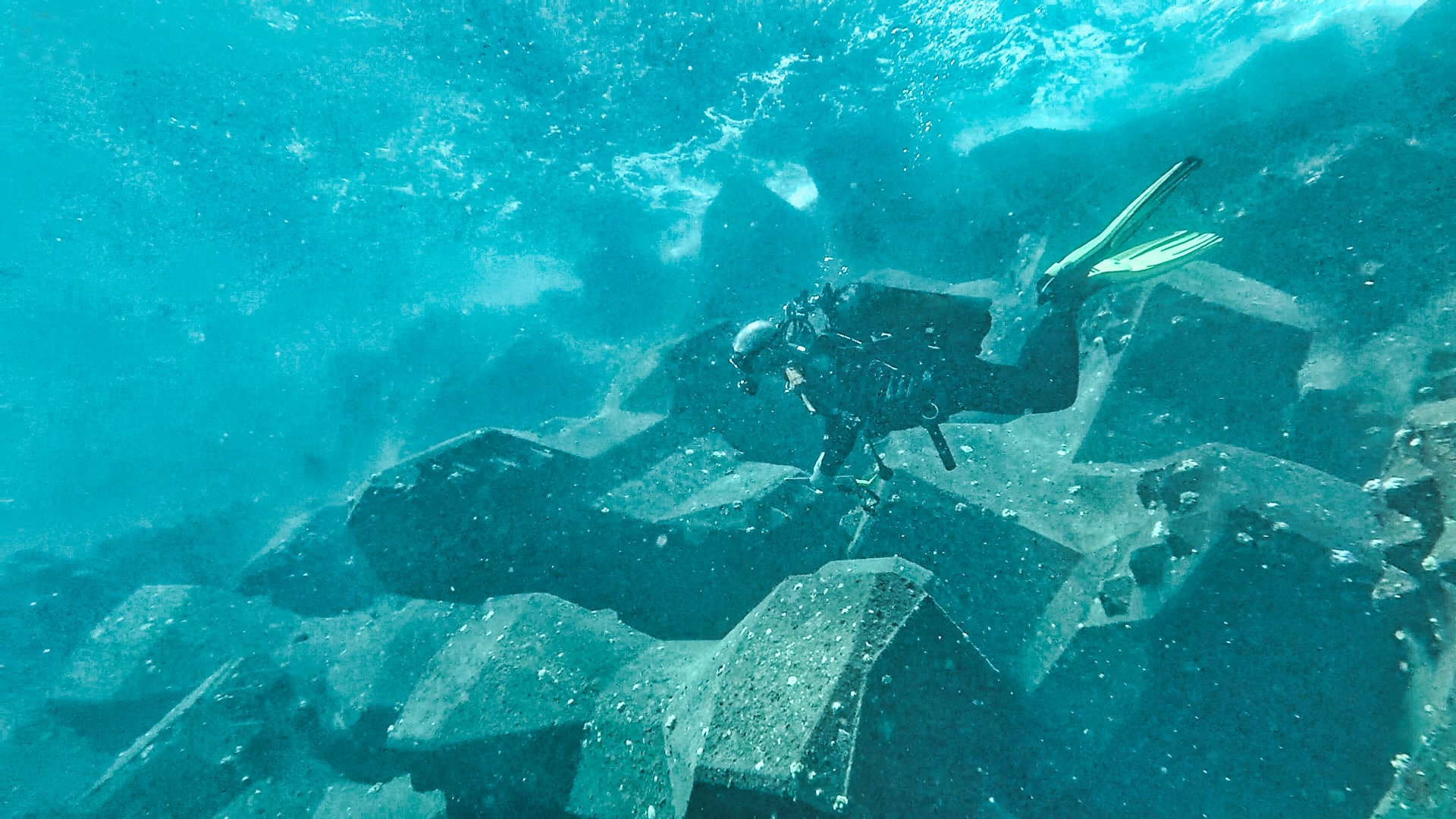
Objectives of CLAS expert assessments
The expert assessment missions carried out by CLAS pursue the following objectives:
to identify and characterize disorders affecting maritime breakwater armour layers;
to analyze the mechanisms at the origin of the observed defects (design, wave action, geotechnics, installation, interlocking, underlayer, toe berm, crest);
to assess the possible evolution of disorders in the short, medium, and long term;
to provide independent technical insight to support decision-making.
CLAS expertise is never limited to a partial visual observation. It aims to understand the overall behavior of the structure and the interactions between its different components.
Intervention resources adapted to complex maritime structures
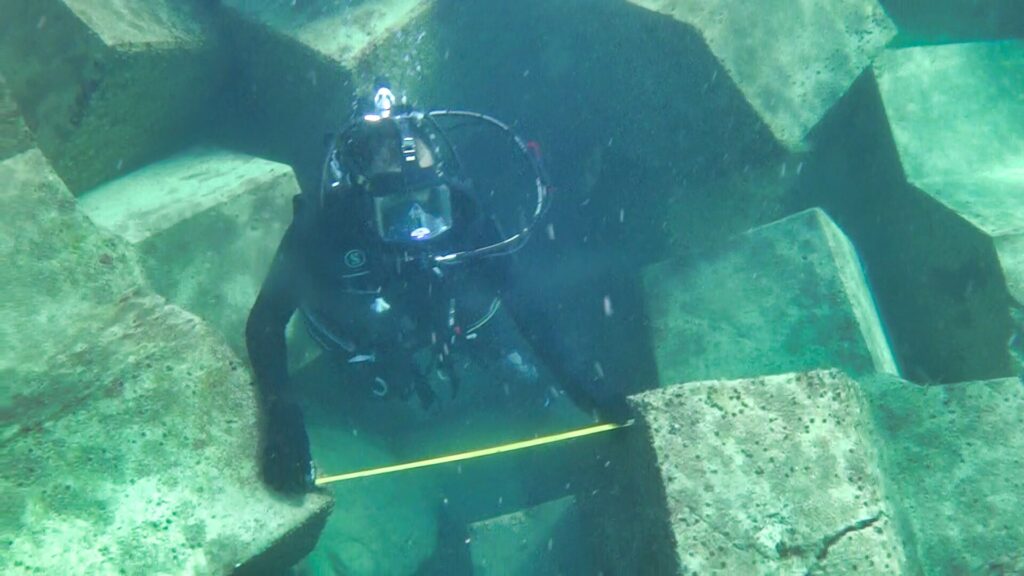
CLAS has specific resources to intervene on breakwaters with artificial concrete block armour layers:
expert inspectors trained in single-layer armour systems,
mastery of underwater measurement and observation techniques,
above-water and drone-based inspections,
cross-analysis combining field observations, design documents, and hydraulic exposure conditions.
These resources make it possible to intervene directly on the critical areas of the structure, where disorders actually develop and where indirect tools show their limitations.
A rigorous methodology based on established best practice rules
CLAS expert assessments are based on:
international best practice rules applicable to maritime breakwaters (Rock Manual, CEREMA Rock Armour Guide);
the project’s contractual documents and technical reference frameworks;
direct observation of the armour layer, from the underlayer to the crest;
analysis of interlocking mechanisms, bearing conditions, and load transfer between blocks;
specific tools dedicated to non-destructive inspection of artificial concrete block armour layers.
This methodology makes it possible to establish diagnoses based on observable and measurable facts, rather than on theoretical assumptions or approximate numerical reconstructions.
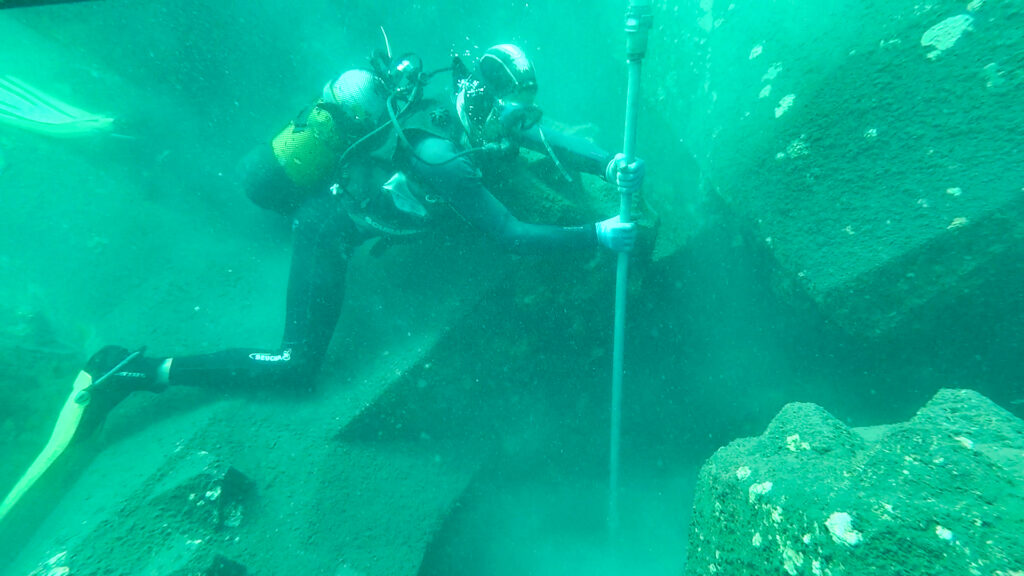
Independence and absence of conflicts of interest: a fundamental principle
Expertise in maritime breakwaters built with artificial concrete blocks is a rare skill, positioned at the interface between design, construction, inspection, and the actual behavior of structures in service.
CLAS operates in complete independence from:
license vendors,
trademark holders,
suppliers of installation or inspection tools,
and construction contractors.
This independence is an essential condition for any credible expert assessment.
An entity that designs, sells, or promotes a technology cannot simultaneously act as an impartial expert when disorders arise.
It is precisely for this reason that CLAS is regularly called upon when a structure requires an objective analysis, free from any conflict of interest.
Formal recognition in sensitive contexts
This requirement for independence has been explicitly recognized in the context of missions entrusted to CLAS on major projects, particularly when owners needed access to high-level expertise, independent from the consortia in charge of the works and from technology holders.
The missions entrusted to CLAS have then consisted in providing:
detailed and well-documented inspection reports,
expert opinions on compliance with established best practice rules,
causal analyses linking observed defects to resulting disorders,
assessments of the likely evolution of identified pathologies,
and, where applicable, targeted audits of quality control procedures.
Unique experience with all types of artificial concrete blocks for maritime breakwater armour layers
CLAS has acquired extensive experience with nearly all artificial concrete blocks used for maritime breakwater armour layers, across all generations and configurations.
This cross-cutting experience makes it possible to:
objectively compare the actual behavior of armour layers,
identify recurrent disorder mechanisms,
distinguish tolerable defects from critical situations,
and propose technical solutions adapted to the real context of the structure.
Results: reliable diagnoses and secure decision-making
CLAS expert assessments enable owners and decision-makers to:
have access to a reliable and independent technical diagnosis,
understand the actual causes of the disorders observed,
avoid unnecessary or inappropriate remedial works,
secure technical, contractual, and financial decisions,
and preserve the long-term durability of maritime structures.
Why engage CLAS for maritime breakwater expertise
Choosing CLAS means choosing:
independent and recognized expertise,
rare and highly specialized experience,
an approach based on direct, real-world observation of structures,
strict compliance with established best practice rules,
and an objective analysis, free from any conflict of interest.
CLAS supports owners, engineering firms, and courts in the expert assessment of maritime breakwaters, with a constant commitment to technical rigor, independence, and responsibility.