
STARBLOCK™ – A Patented Innovation Serving Coastal Environments
Protecting Our Coastlines: A Strategic Challenge
More than 40% of the world’s population lives within 100 km of the coastline. With urbanization, tourism and the intensification of maritime trade, this proportion continues to increase. Faced with rising sea levels, more frequent storms and coastal erosion, coastal infrastructure is becoming increasingly exposed:
• Ports and maritime terminals
• Seaside resorts
• Seafront hotels
• Coastal roads and coastal defense structures
Providing long-term protection for these areas means preserving billions of euros’ worth of infrastructure, ensuring the safety of populations, and maintaining the economic and tourist attractiveness of coastal regions.
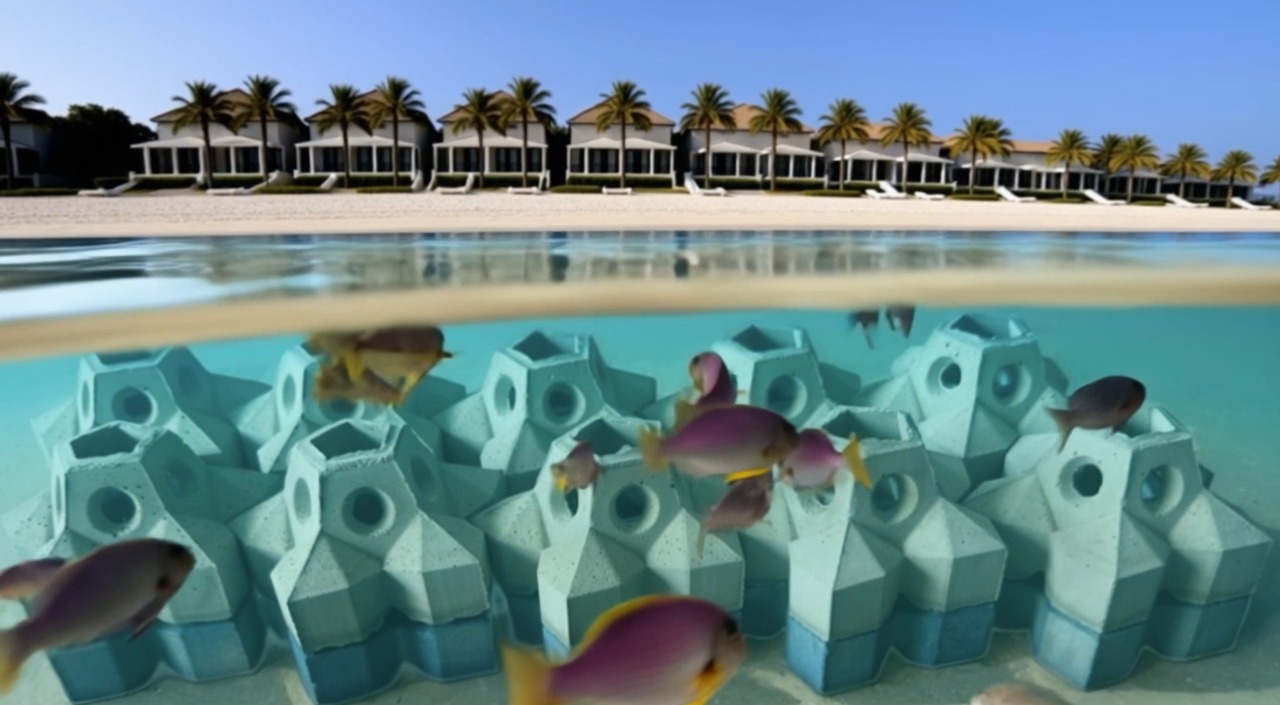
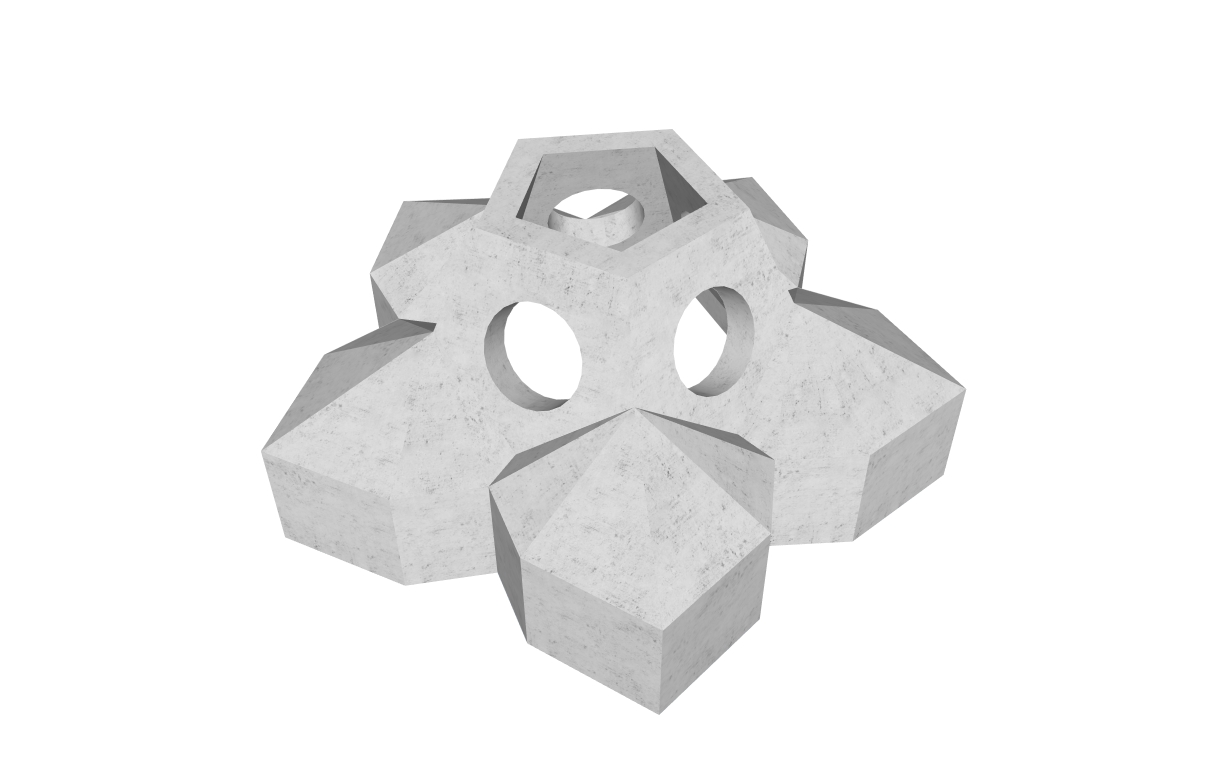
STARBLOCK™: Coastal Protection Serving Marine Ecosystems
STARBLOCK™ is a new-generation concrete coastal protection unit designed to:
dissipate wave energy,
preserve beaches,
promote marine biodiversity.
Developed through an innovation protected by an international patent, STARBLOCK™ provides project owners and engineering firms with an exclusive coastal protection solution, resulting from R&D work carried out by CLAS to address today’s coastal challenges.
An Effective Response to Coastal Erosion
Thanks to its star-shaped geometry, STARBLOCK™ breaks wave action and significantly reduces wave impact.
It slows erosion, stabilizes shorelines and protects exposed infrastructure, even in high-energy environments.
Proven Effectiveness in Laboratory Testing
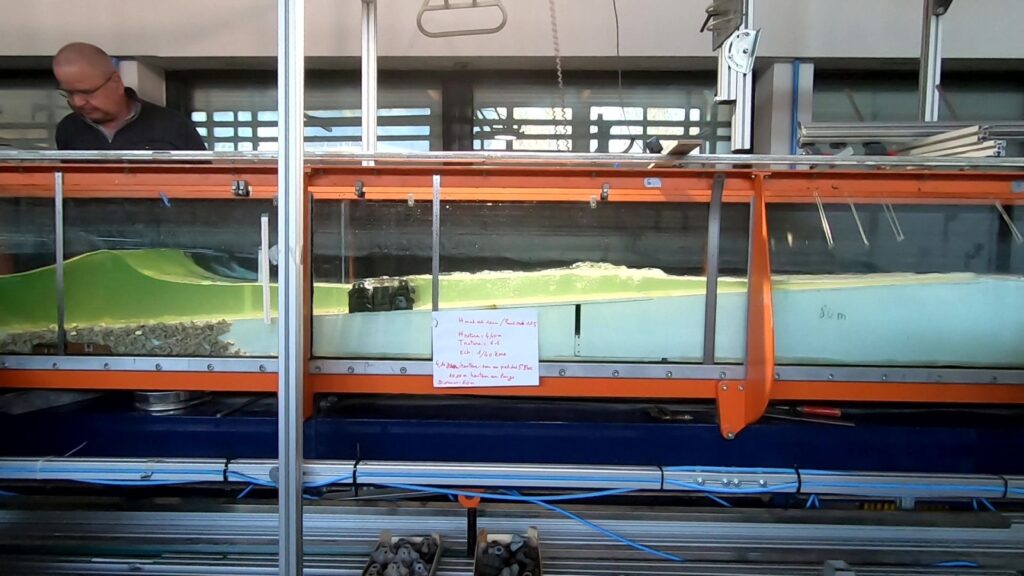
Laboratory tests conducted at the SeaTech Laboratory (University of Toulon) have demonstrated:
exceptional stability, even under extreme conditions;
absorption of up to 90% of wave energy for a submerged reef;
complete protection (100%) when the reef is emergent.
STARBLOCK™ performance is measured, reproducible and scientifically validated.
These results make STARBLOCK™ particularly suitable for the protection of:
• ports and maritime terminals
• seaside resorts
• seafront hotels
• coastal roads and coastal defense structures
Providing long-term protection for these areas means preserving billions of euros’ worth of infrastructure, ensuring the safety of populations, and maintaining the economic and tourist attractiveness of coastal regions.
Simple, Fast and Cost-Effective Installation
Local production under controlled manufacturing processes;
Installation without any specific orientation, unlike other technical armour units;
No need for specialized equipment, reducing installation costs and timelines.
Multiple Applications
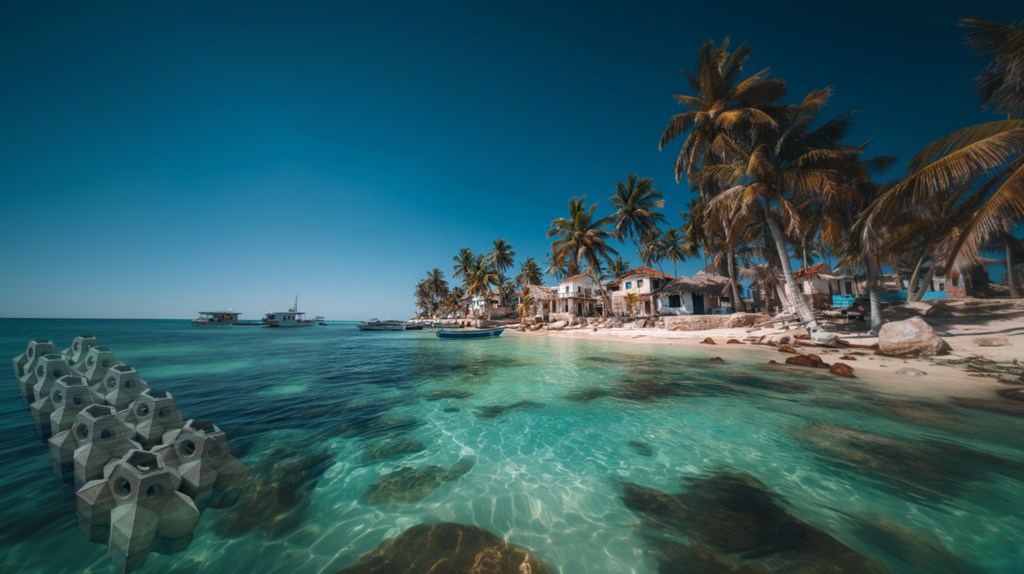
Submerged Breakwater: Wave Attenuation and Lagoon Effect
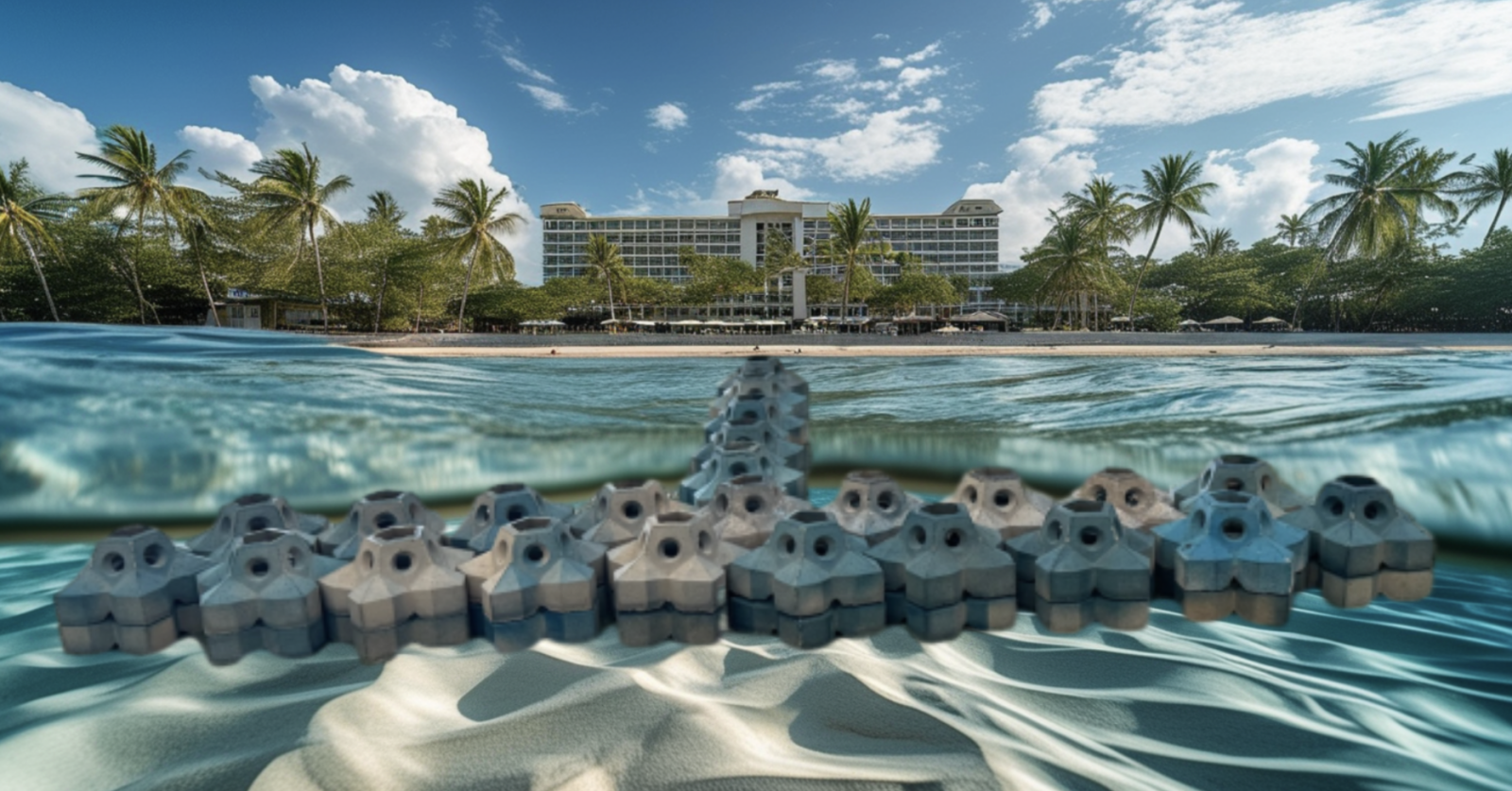
Protecting the beach is vital for any beachfront hotel: it is the key asset that attracts visitors, structures tourism activity and determines the value of the property. Discreetly installed below the water surface, STARBLOCK™ units create a dissipative barrier that reduces wave energy, preserves sand and limits coastal erosion.
Thanks to their unique geometry, these modules also promote biodiversity and transform the protected area into a true snorkeling trail directly accessible from the beach.
Hotels therefore benefit from a coastal resilience solution that is effective, durable and environmentally friendly, protecting their assets while enhancing the visitor experience.
Protection of Viaduct Piers Against Scour
Scour around viaduct piers represents one of the major risks to the stability of structures exposed to currents. Thanks to their three-dimensional geometry, STARBLOCK™ modules dissipate hydrodynamic energy, reduce local flow velocities and stabilize the seabed around structures. This action effectively limits erosion and provides long-term protection of viaduct foundations.
However, STARBLOCK™ performance goes beyond structural protection. Its hollow shape, cavities and multiple interfaces promote the rapid establishment of diverse marine life. Irregular surfaces accelerate biological colonization (algae, cold-water corals, sponges), while the voids become natural refuges for juvenile fish and invertebrates.
Thus, in addition to securing infrastructure, STARBLOCK™ units recreate a complex habitat that enhances the local ecosystem. This dual function — infrastructure protection and ecological restoration — makes STARBLOCK™ an exemplary climate-resilience solution, perfectly suited to riverine, estuarine or coastal environments.
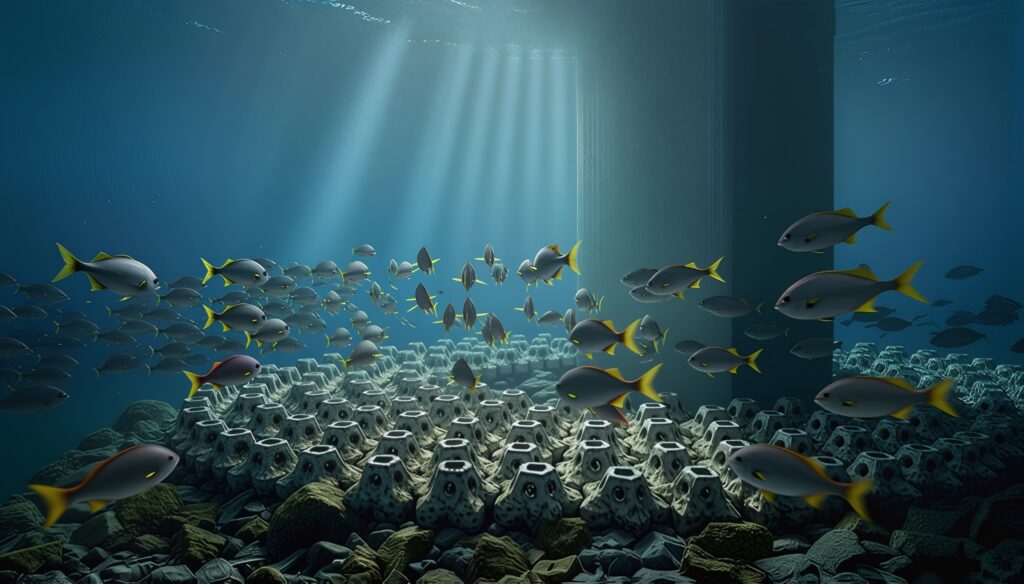
Stabilization of the Toe of Armour Layers for Breakwaters Built with Artificial Concrete Blocks
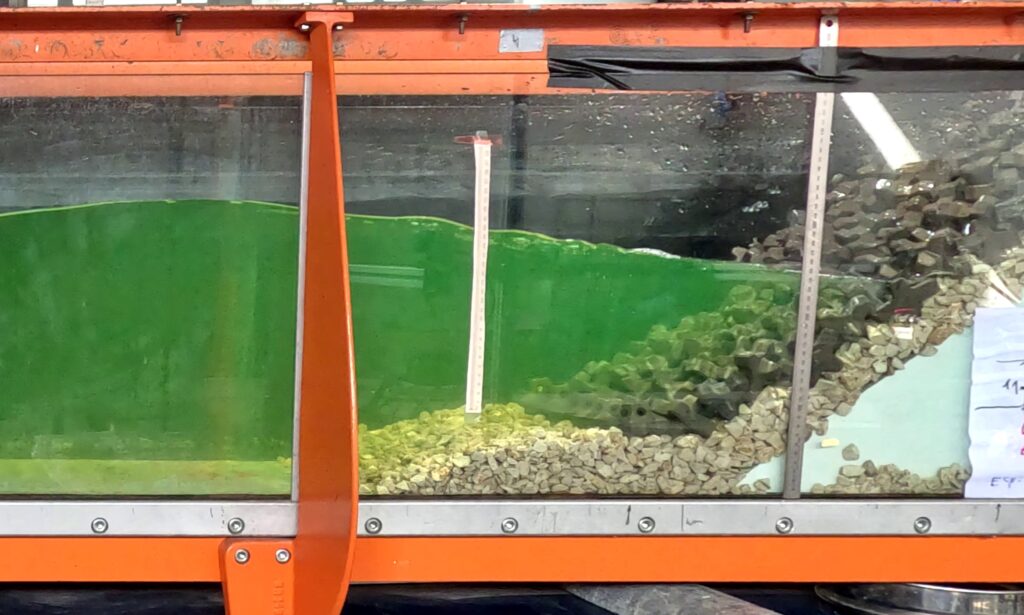
Replacing natural rock with STARBLOCK™ units at the toe of armour layers provides a more durable solution, both for the structure and for the environment. The extraction and transport of large quarry rocks have a significant ecological footprint, whereas STARBLOCK™ units can be manufactured locally with a precisely controlled quantity of materials, while offering equivalent — or even superior — stability.
Their true advantage is ecological: once submerged, STARBLOCK™ units create micro-habitats that promote marine colonization, hosting algae, invertebrates and juvenile fish. The toe protection no longer merely safeguards the breakwater; it generates biodiversity and strengthens the site’s natural resilience.
With STARBLOCK™, coastal protection becomes a positive action for the environment.
Mangrove Protection and Ecological Restoration
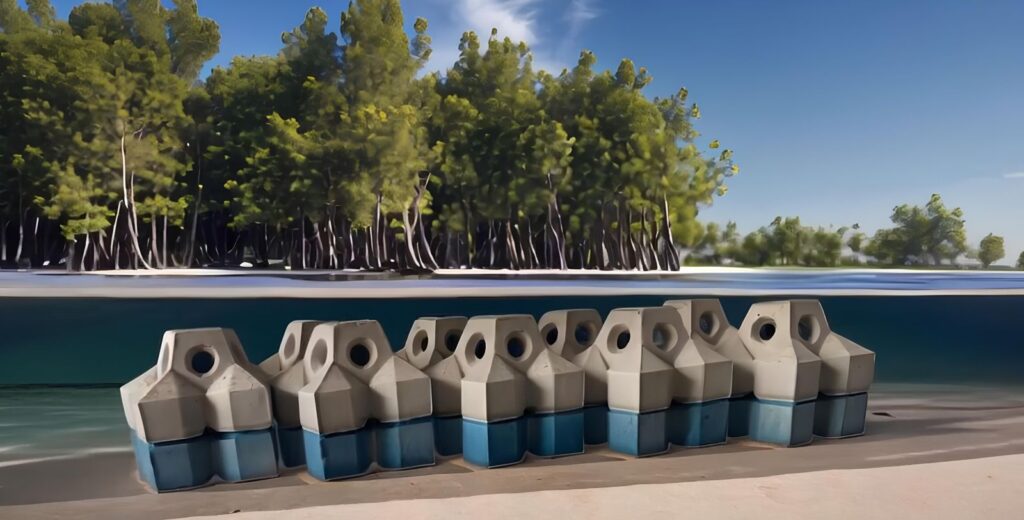
Mangroves can only survive if a sand barrier separates them from offshore wave action. When this barrier erodes, the mangrove is directly exposed and begins to retreat.
By dissipating wave energy, STARBLOCK™ modules stabilize sediments and prevent the disappearance of the sandy barrier.
The area located behind the STARBLOCK™ units remains calm, promoting sediment deposition and allowing the mangrove to develop safely.
In this way, STARBLOCK™ protects both the coastline and the ecosystem, while sustainably strengthening coastal resilience.
Coral Reef Restoration and Construction
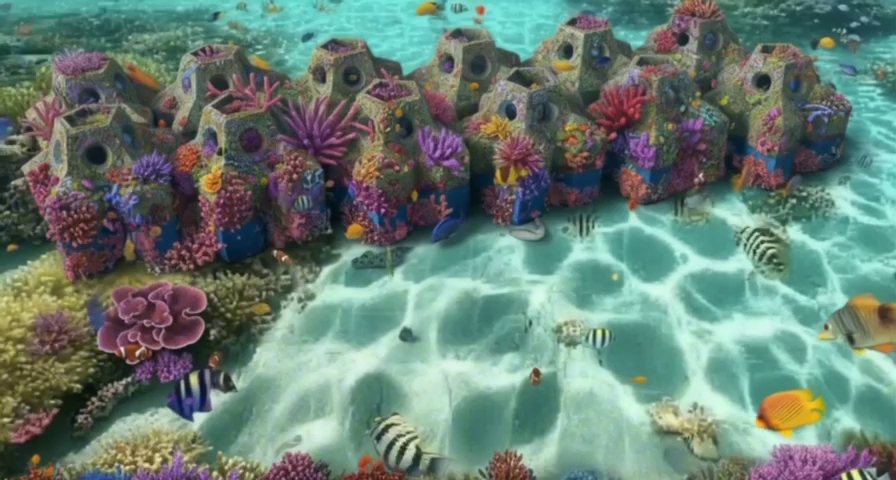
Corals naturally attach to concrete, whose texture and mineral composition promote larval adhesion. With its hollow, starfish-like geometry, stackable and interlockable, STARBLOCK™ makes it easy to create three-dimensional structures on which corals can settle. By assembling the modules, a wide variety of artificial reefs can be formed, quickly shaping a natural underwater landscape that supports biodiversity and ecosystem regeneration.